
Project Overview
Client: Bild Social
Project: Desktop-oriented web-based App Manager
Role: Lead Product Designer (Research, UX, UI, Concept to Implementation)
About the project
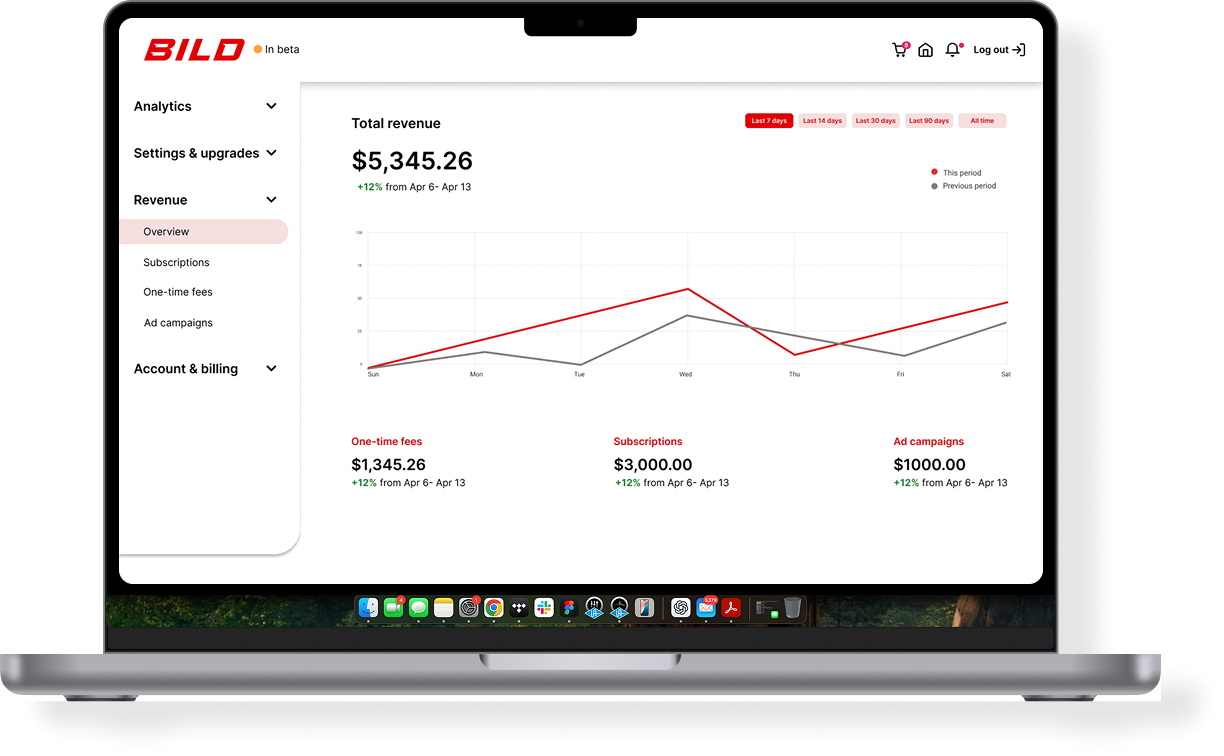
Bild Social is a white-labeled version of the Mesh social media app, designed for bodybuilders to connect, share resources, and access information on health, supplements, and events. The goal of this project was to create an App Manager that allowed Bild Administrators to manage analytics, revenue, subscriptions, ad campaigns, and edit app visuals asynchronously—eliminating their previous reliance on direct support from Mesh’s internal team for every modification.
Problem Statement
Previously, administrators of white-labeled Mesh applications had to schedule time with Mesh’s product team to make all app-related changes. This created inefficiencies, delays, and resource bottlenecks with our small but mighty team. The goal of the App Manager was to empower Bild’s application administrators with the ability to make necessary changes independently, increasing efficiency and reducing dependency on direct developer involvement.
Key Challenges:
Admins lacked autonomy in managing their app settings.
Changes required significant time and resources from Mesh.
The solution needed to be scalable for future Mesh clients.
Research & Discovery
Research Overview:
Conducted interviews with Bild application administrators to understand pain points, workflows, and feature priorities.
Collaborated with Mesh stakeholders and engineers to define technical constraints and feasibility.
Prioritized features based on administrator needs and Mesh’s available resources.
Key insights & findings:
High Dependency on Mesh’s Team
"It’s frustrating having to schedule meetings with Mesh for small changes that should be quick. We need more control over our own platform.“
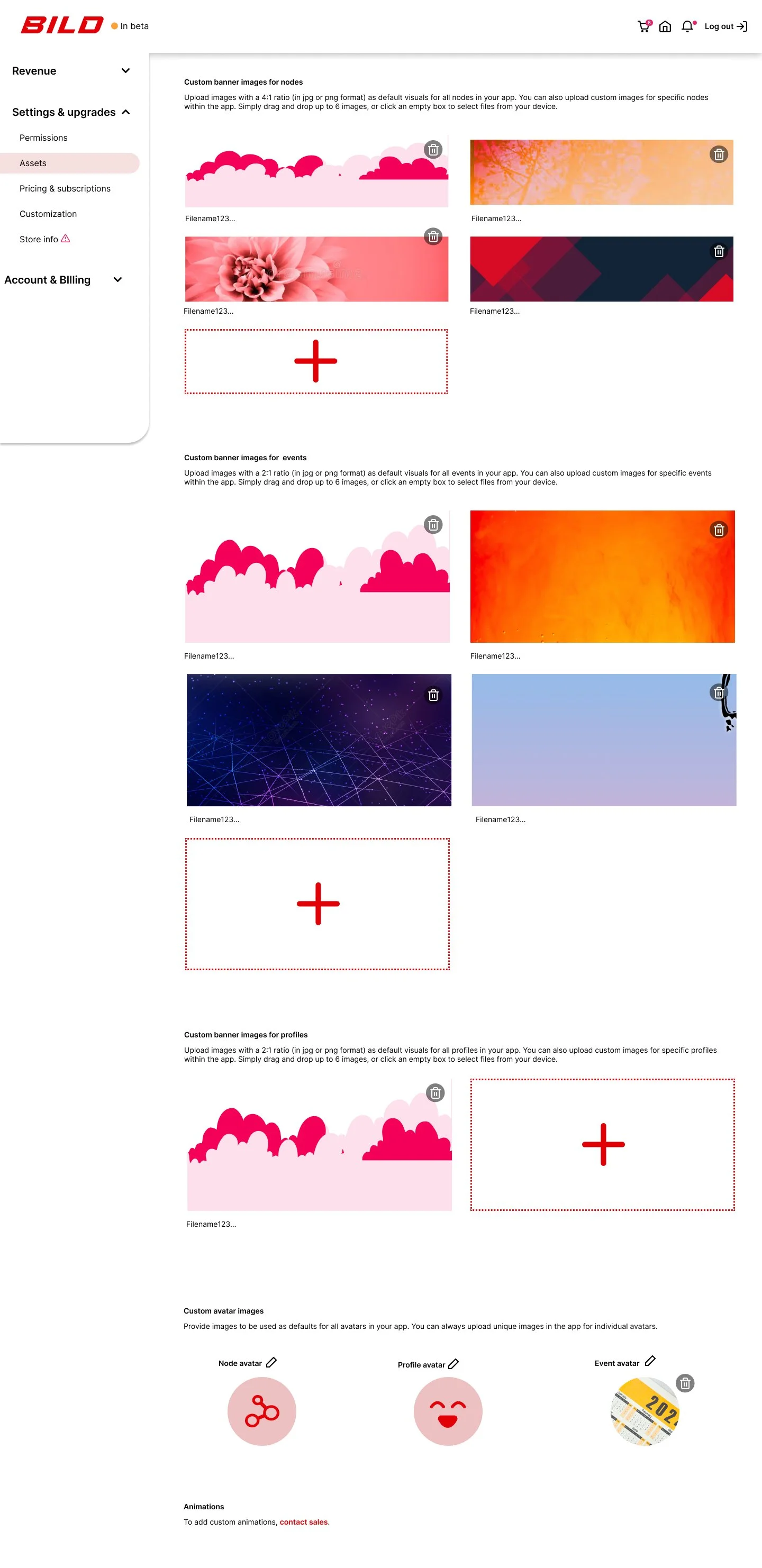
→ Design Implication: The App Manager should allow admins to make straightforward updates (e.g., changing default images, adjusting subscription tiers) without a need for developer intervention.
Need for Clearer Performance Metrics
"We don’t have an easy way to see how well our app is doing. It would help to have all analytics in one place."
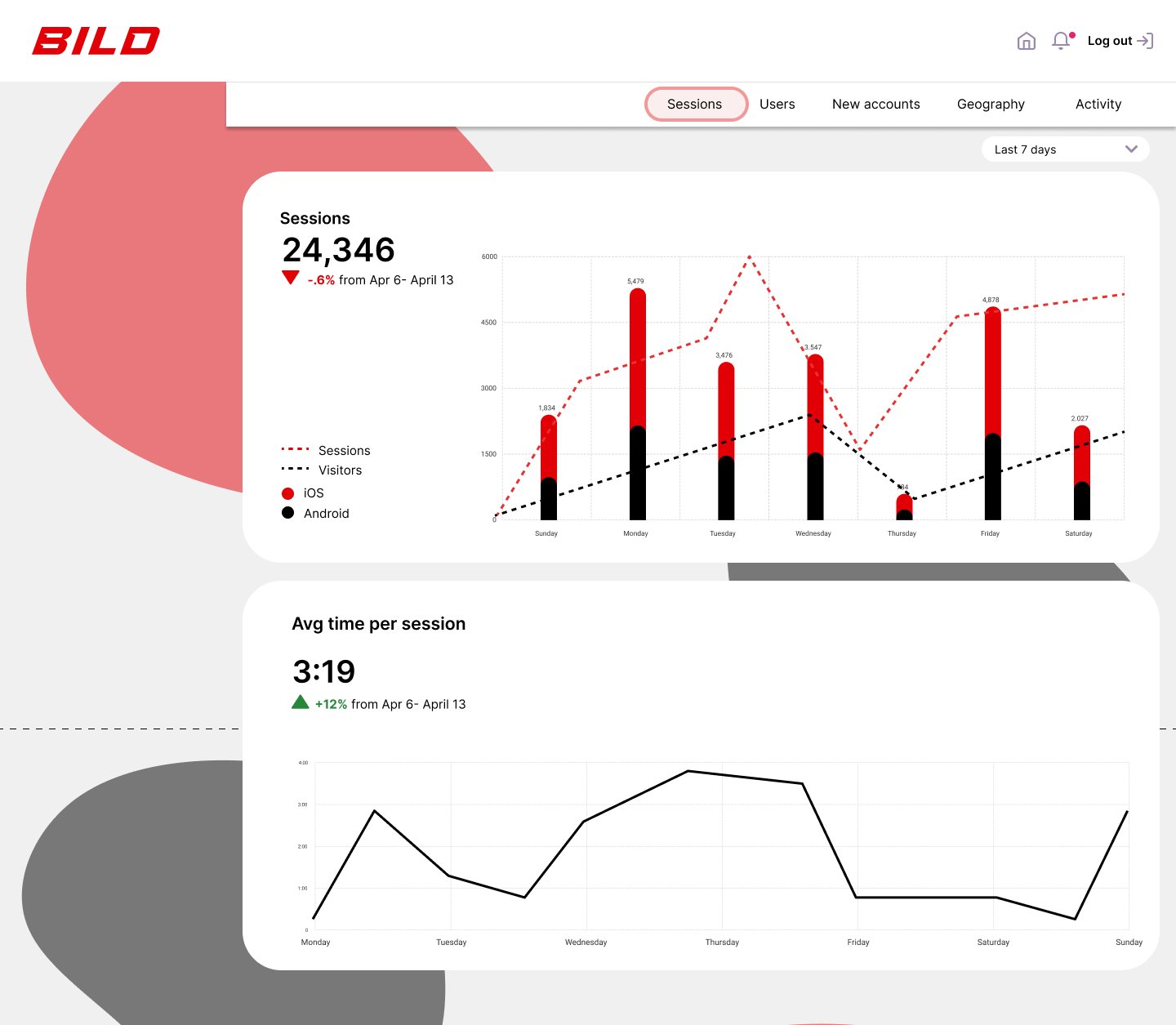
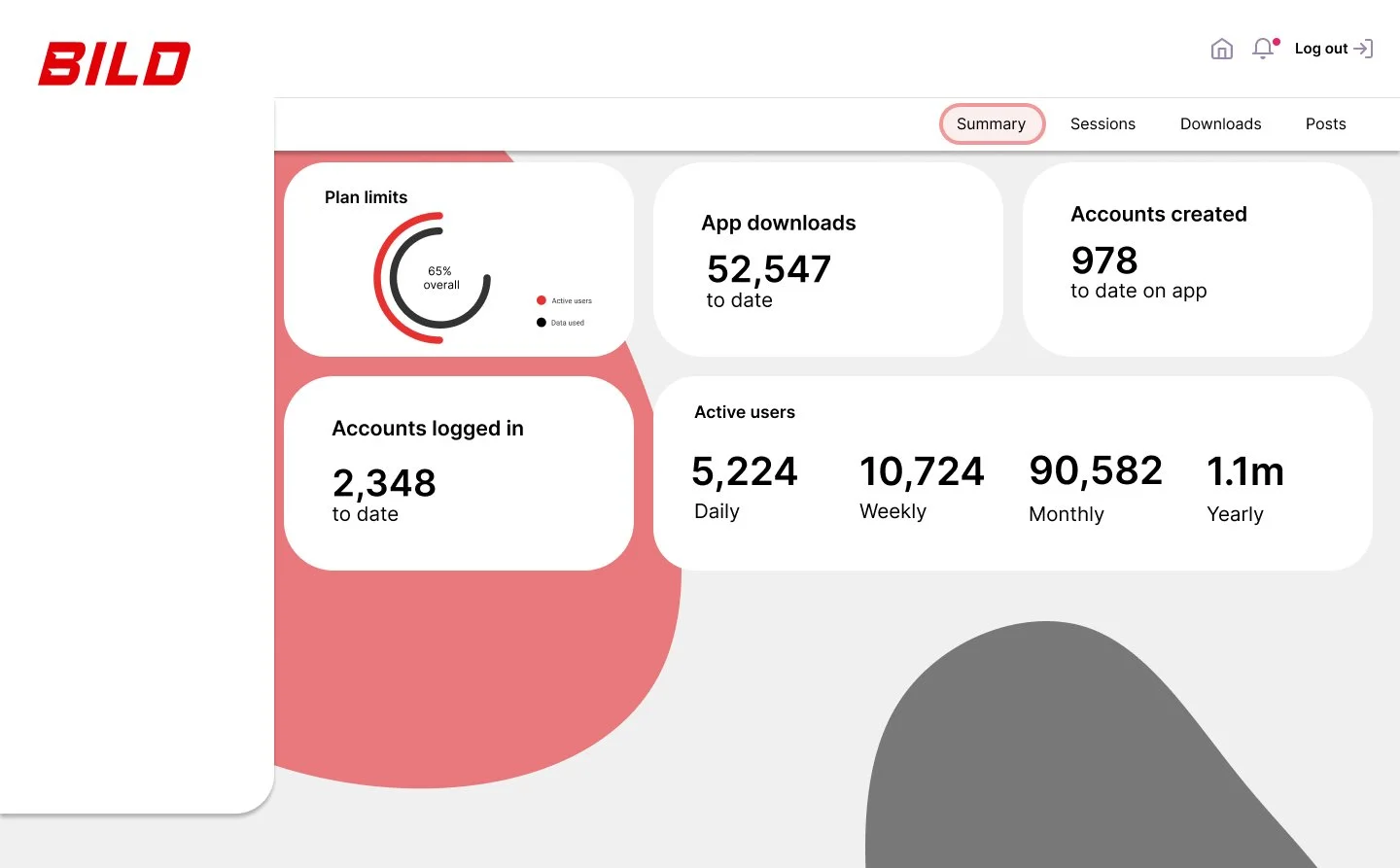
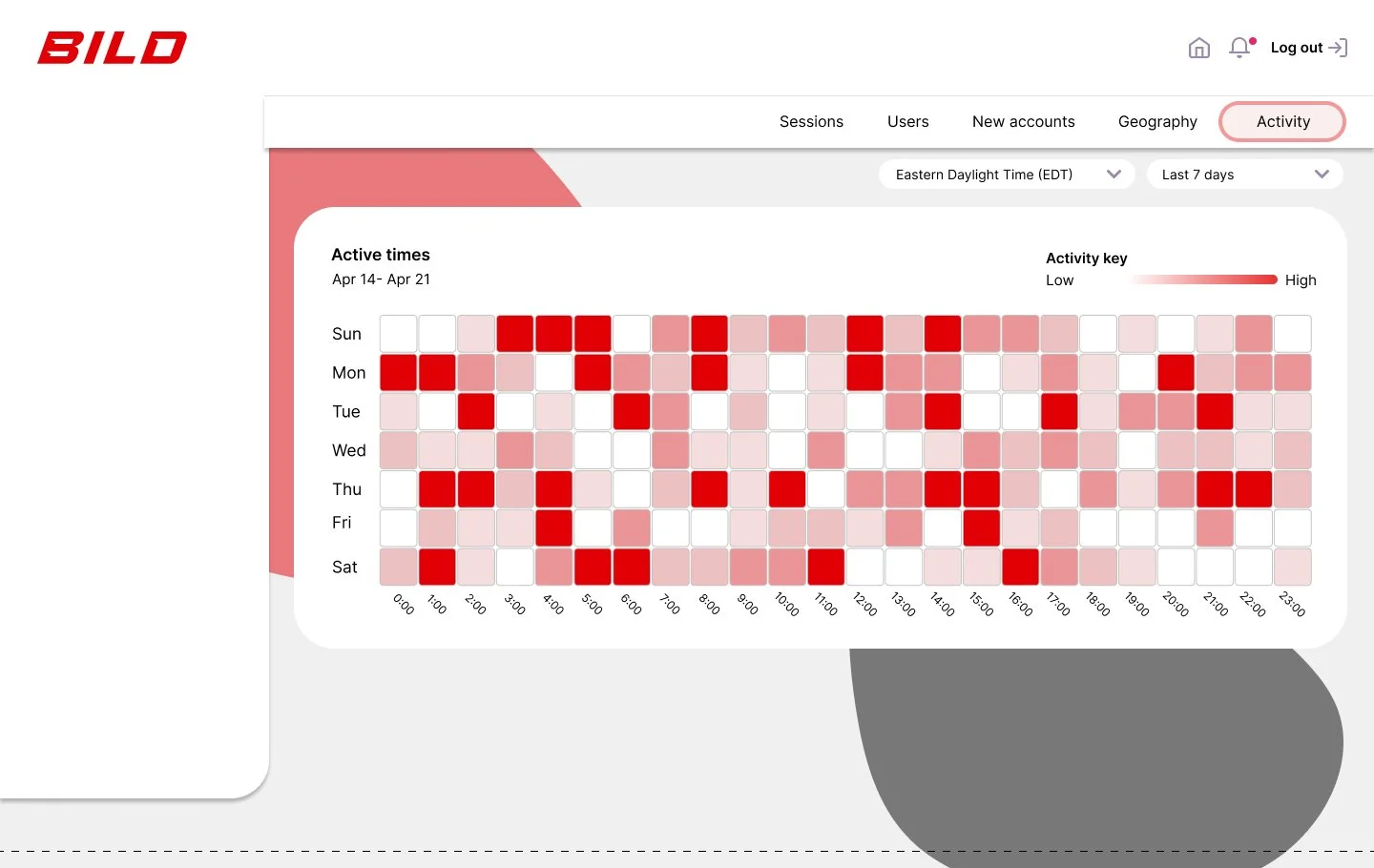
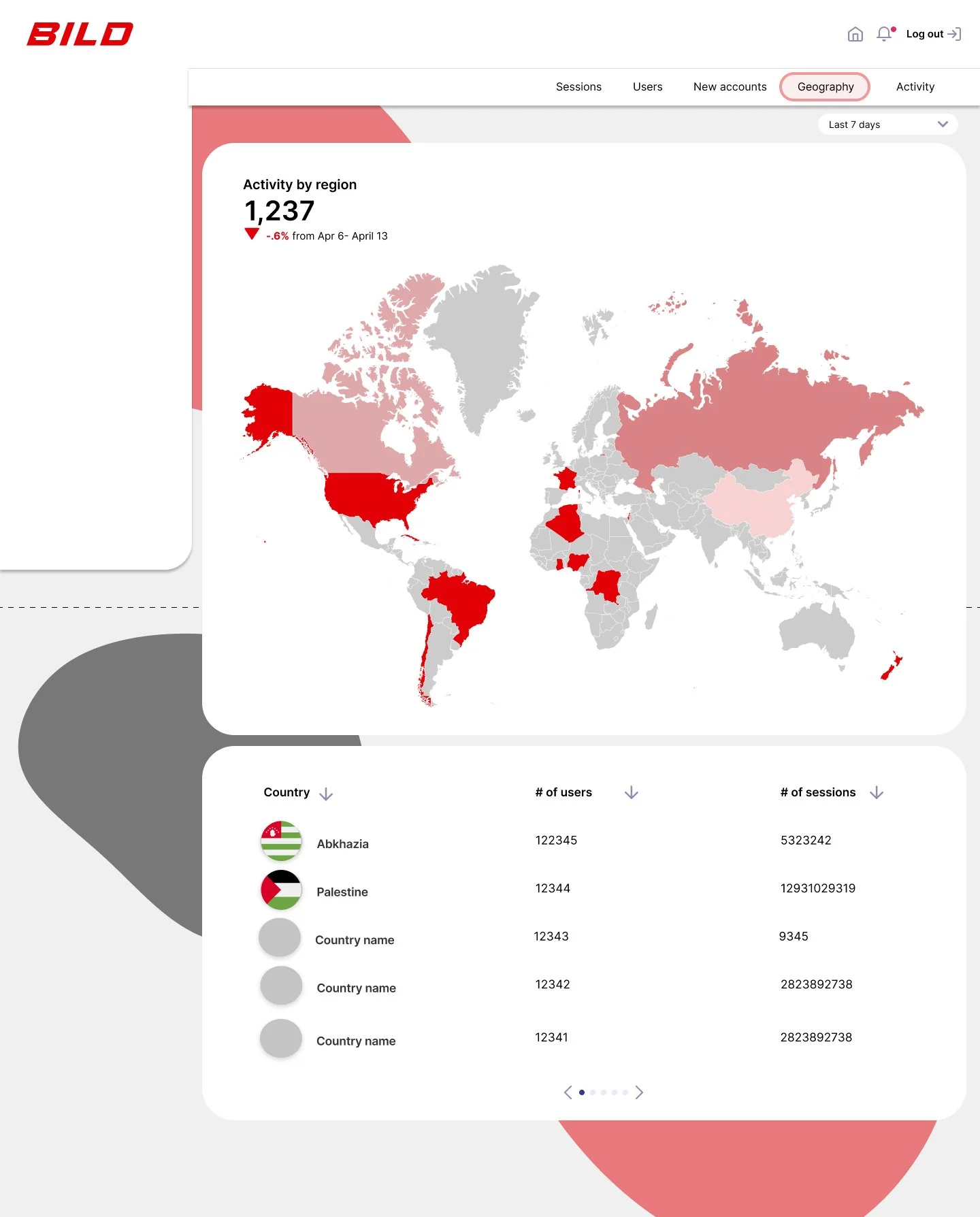
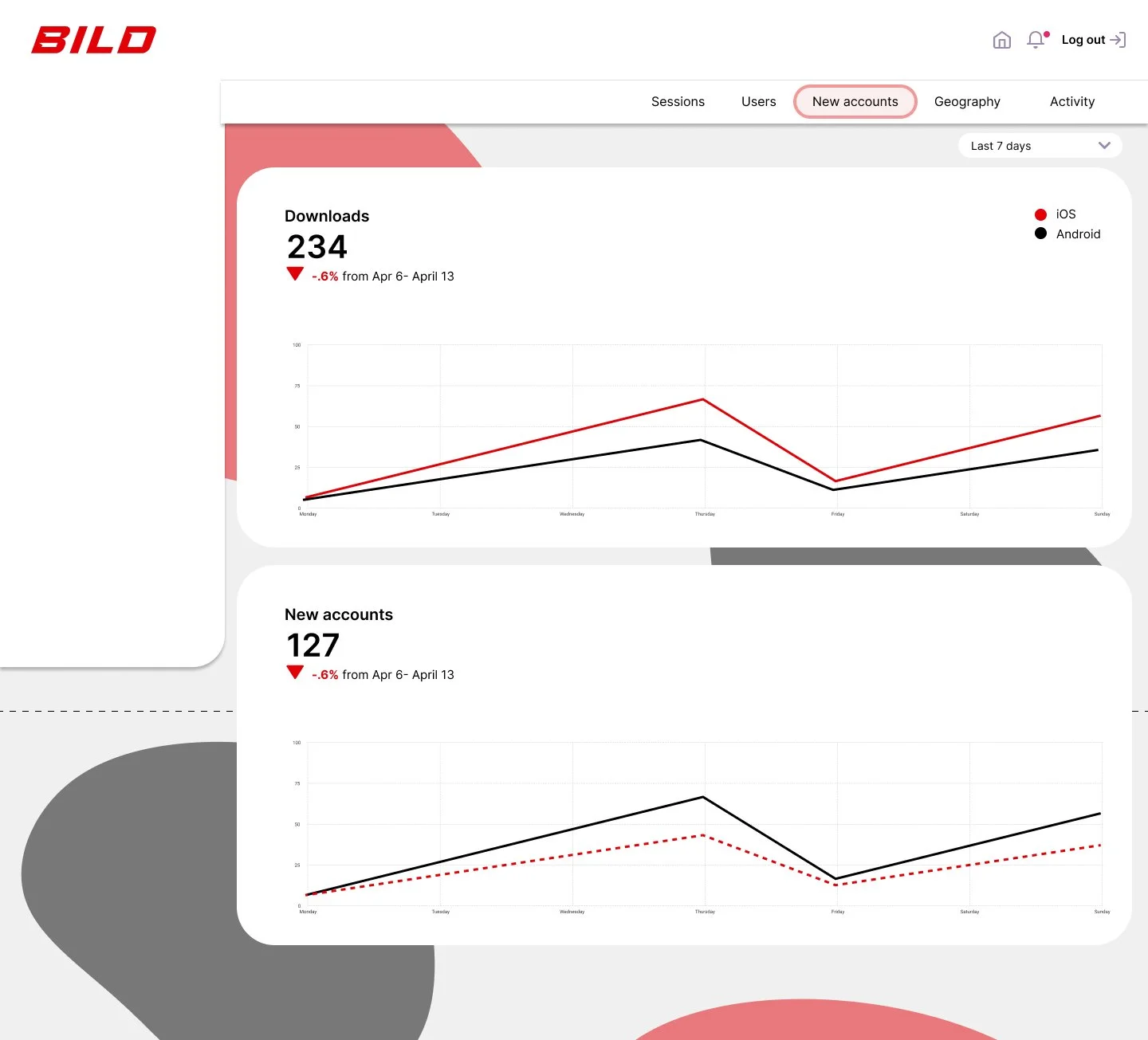
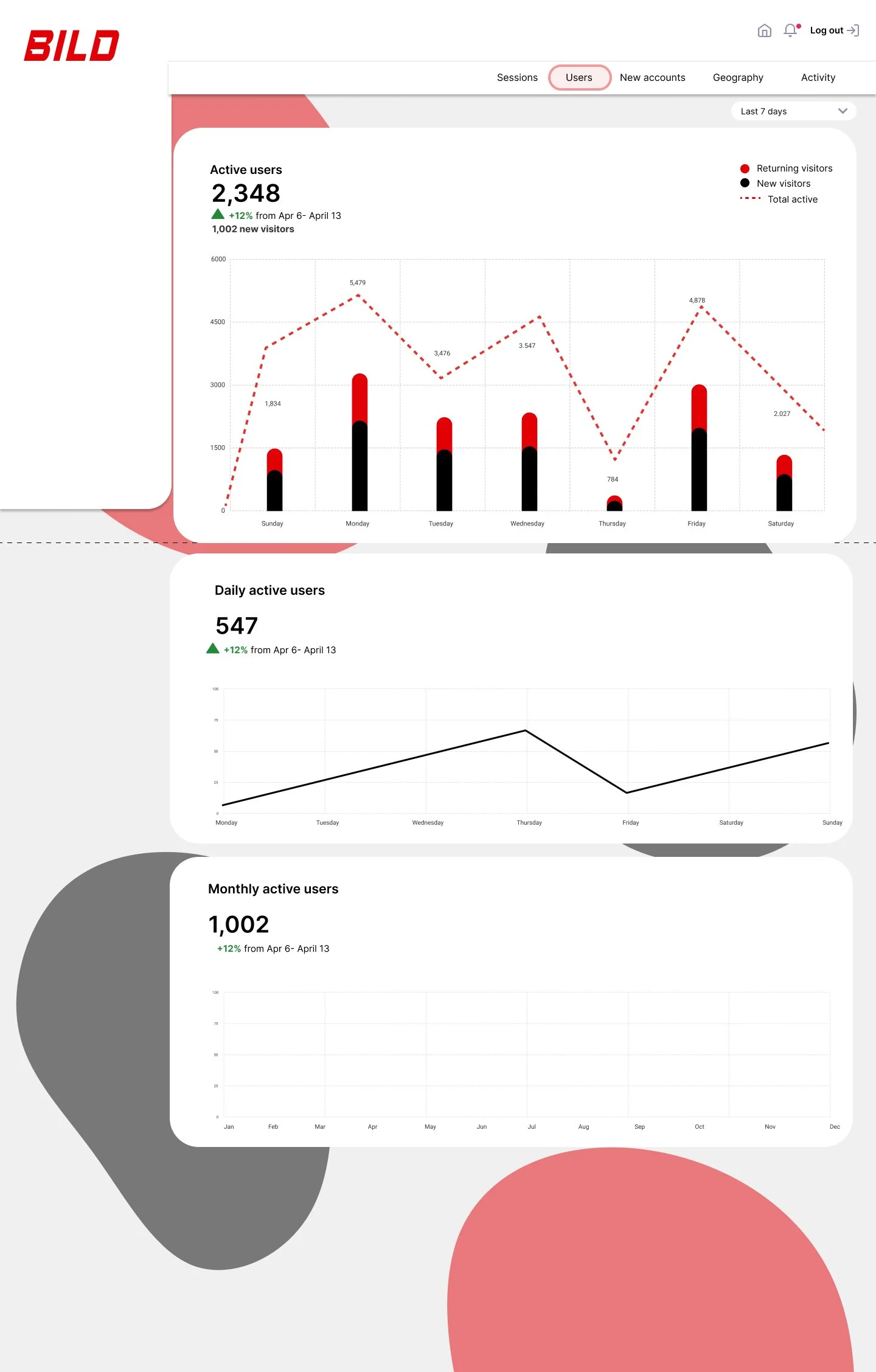
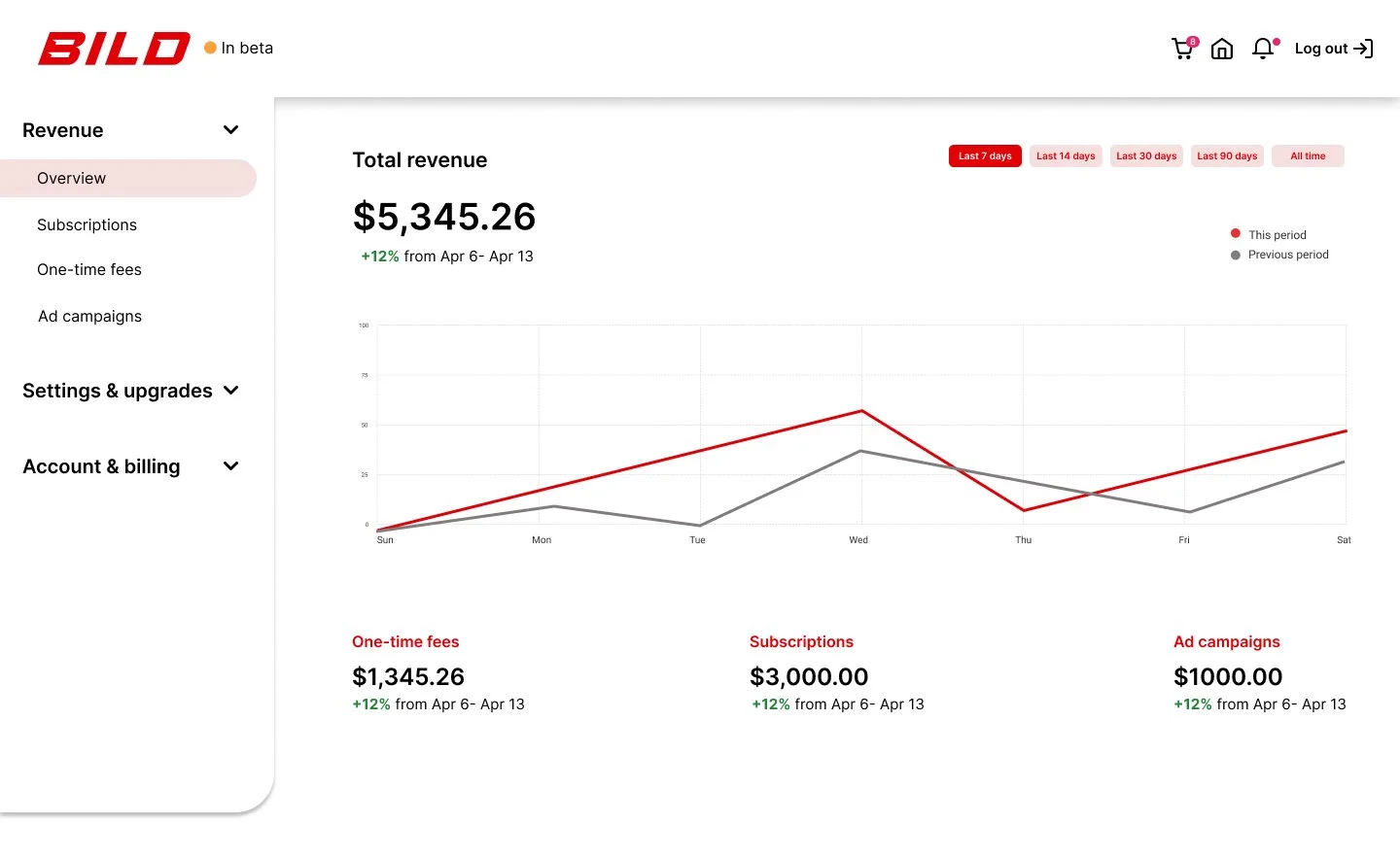
→ Design Implication: A centralized dashboard with revenue, subscriptions, and ad performance metrics should be accessible at a glance.
Desire for Simplified Workflow
"Managing ads and subscriptions feels clunky right now. We’d love something more intuitive that doesn’t require us to dig through multiple tools."
→ Design Implication: The App Manager should consolidate ad management and subscription settings into a streamlined interface with clear navigation.
Balancing Customization and Constraints
"We have ideas for new features, but we know Mesh can’t build everything we want just for us. It would be great to have flexibility within the limits of what’s possible."
→ Design Implication: Prioritization of must-have features for the MVP, with a roadmap for scaling up based on future resource allocation.
Scaling Considerations for Future Clients
"Other brands using Mesh will probably need something similar, so we don’t want this tool to be too tailored just to Bild."
→ Design Implication: While the design should reflect Bild’s needs, it should also be modular and adaptable for other Mesh clients in the future.
Design & Development Process
Site Map & Information Architecture
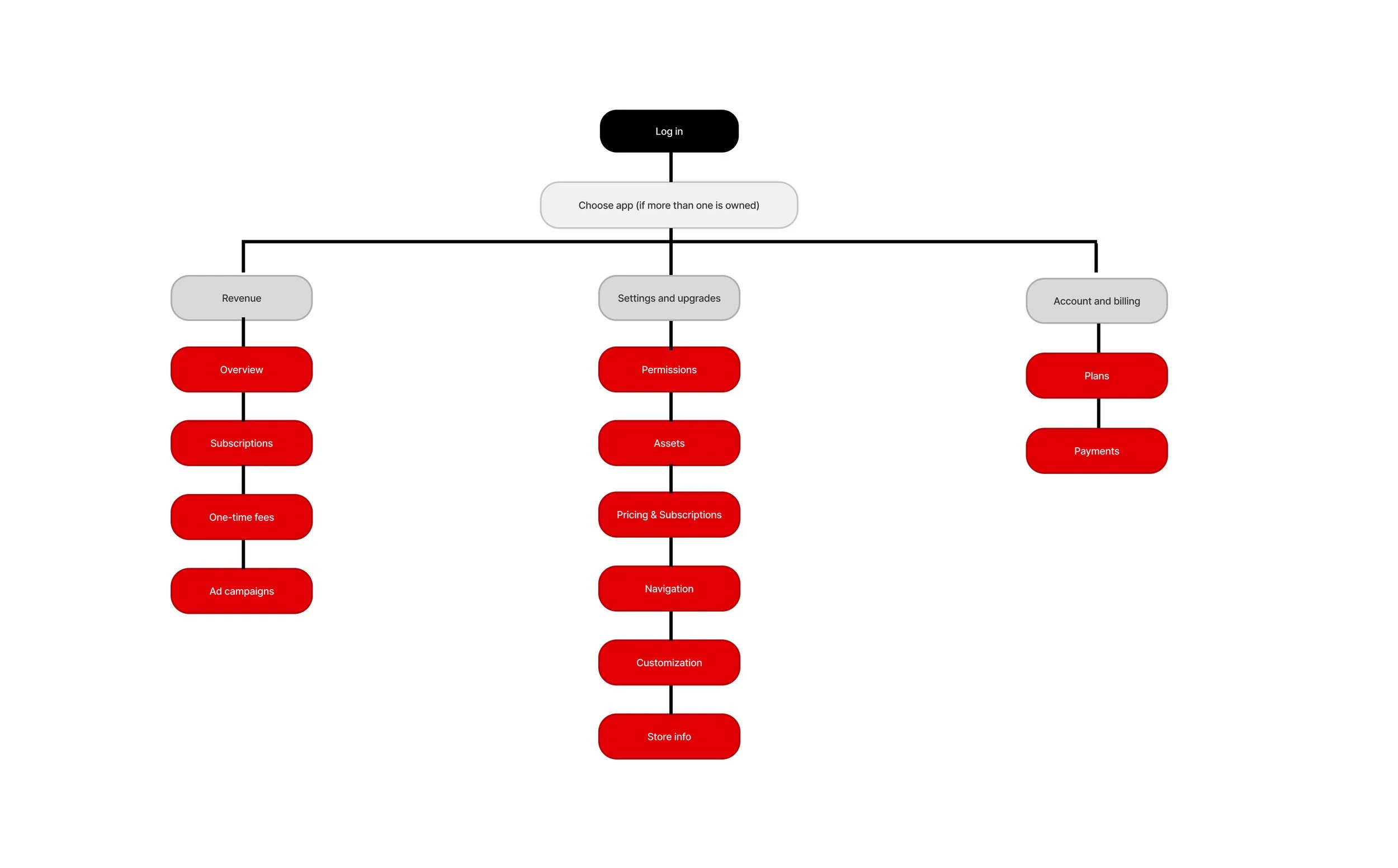
To ensure seamless navigation, I created sitemaps outlining how admins would interact with the platform. These preliminary structures mapped out the site’s hierarchy and key tasks, such as modifying subscription settings, updating default images, and viewing analytics dashboards.
Wireframing & Iteration
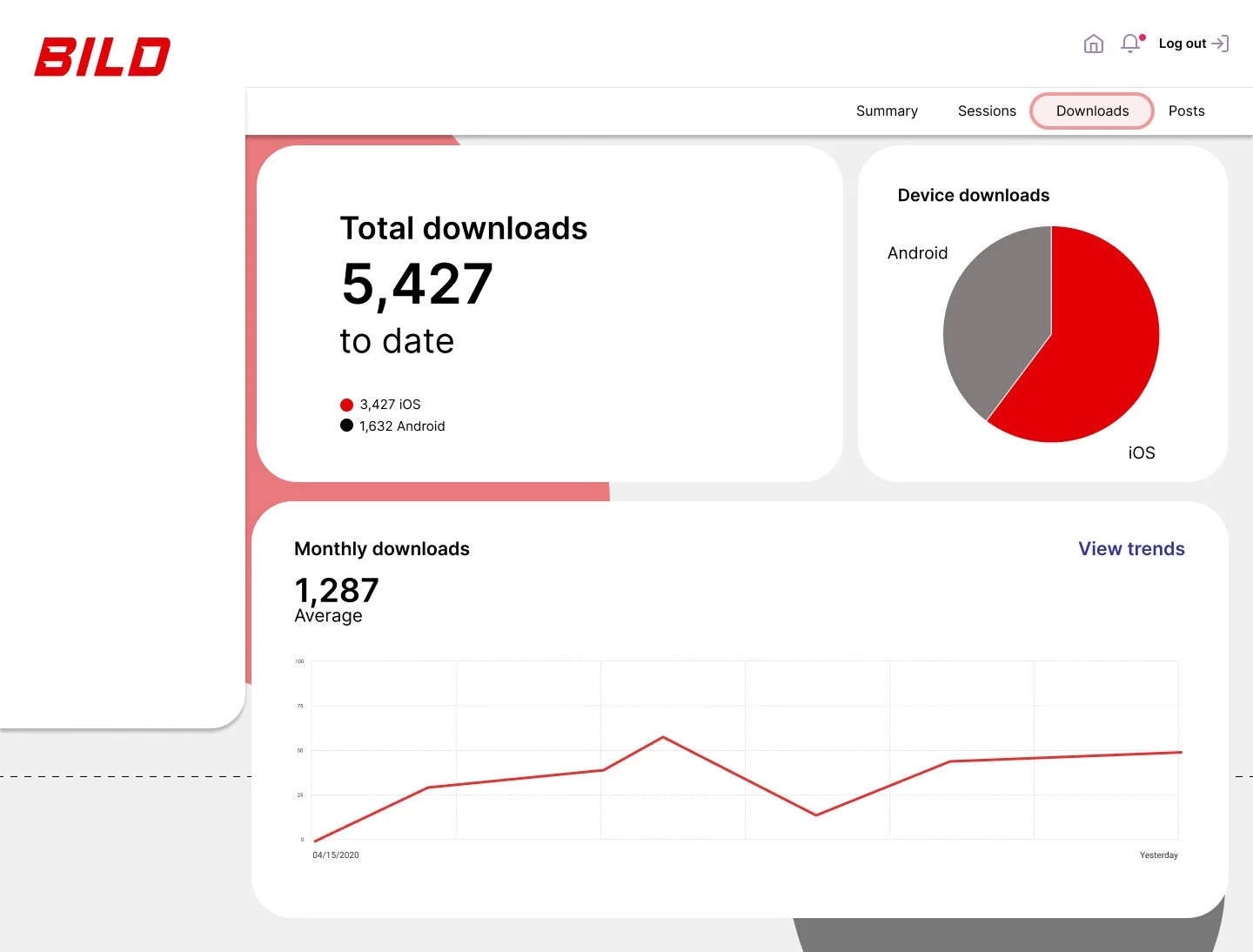
Rather than starting with low-fidelity sketches, I moved directly into medium-fidelity mockups to accelerate the design process. Early iterations were presented to Bild admins and Mesh stakeholders for feedback.
Key Iterations:
Version 1: A fully robust platform with extensive automation features.
Version 2: A streamlined version prioritizing the highest-impact features for MVP.
Final MVP: Focused on essential admin capabilities, balancing usability with implementation feasibility.


Prototyping & Testing
I developed an interactive prototype that allowed administrators to click through the interface and perform key actions. Testing sessions with Bild admins provided feedback on usability, leading to minor refinements before finalizing the design.
Testing Takeaways:
Admins found the interface intuitive and could complete key tasks without guidance.
Feedback emphasized clarity in analytics presentation and easier customization of subscription settings.
Adjustments were made to improve visual hierarchy and simplify workflows.
📌 Include Here: Prototype video walkthrough or screenshots.
Final Design & Outcome
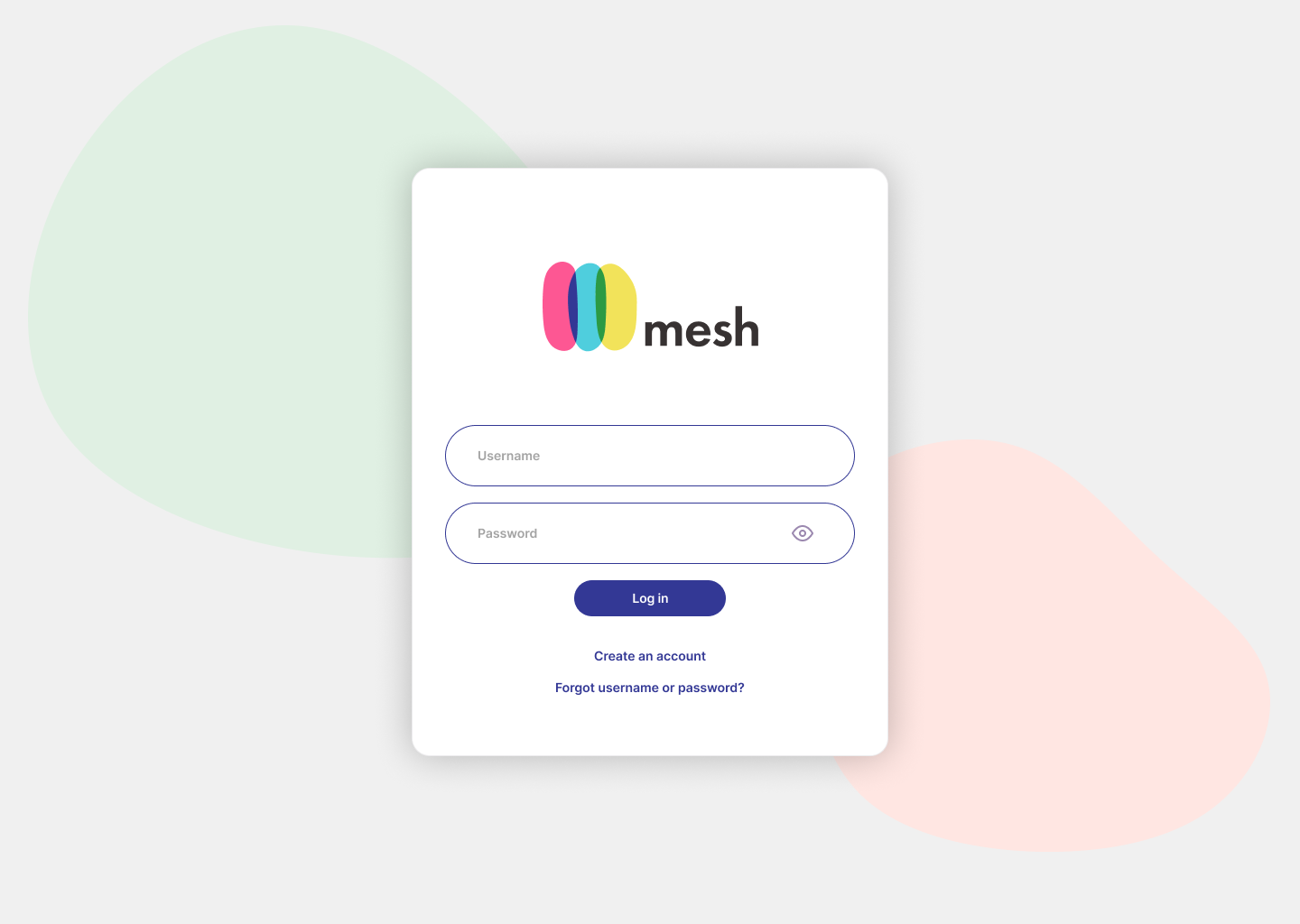
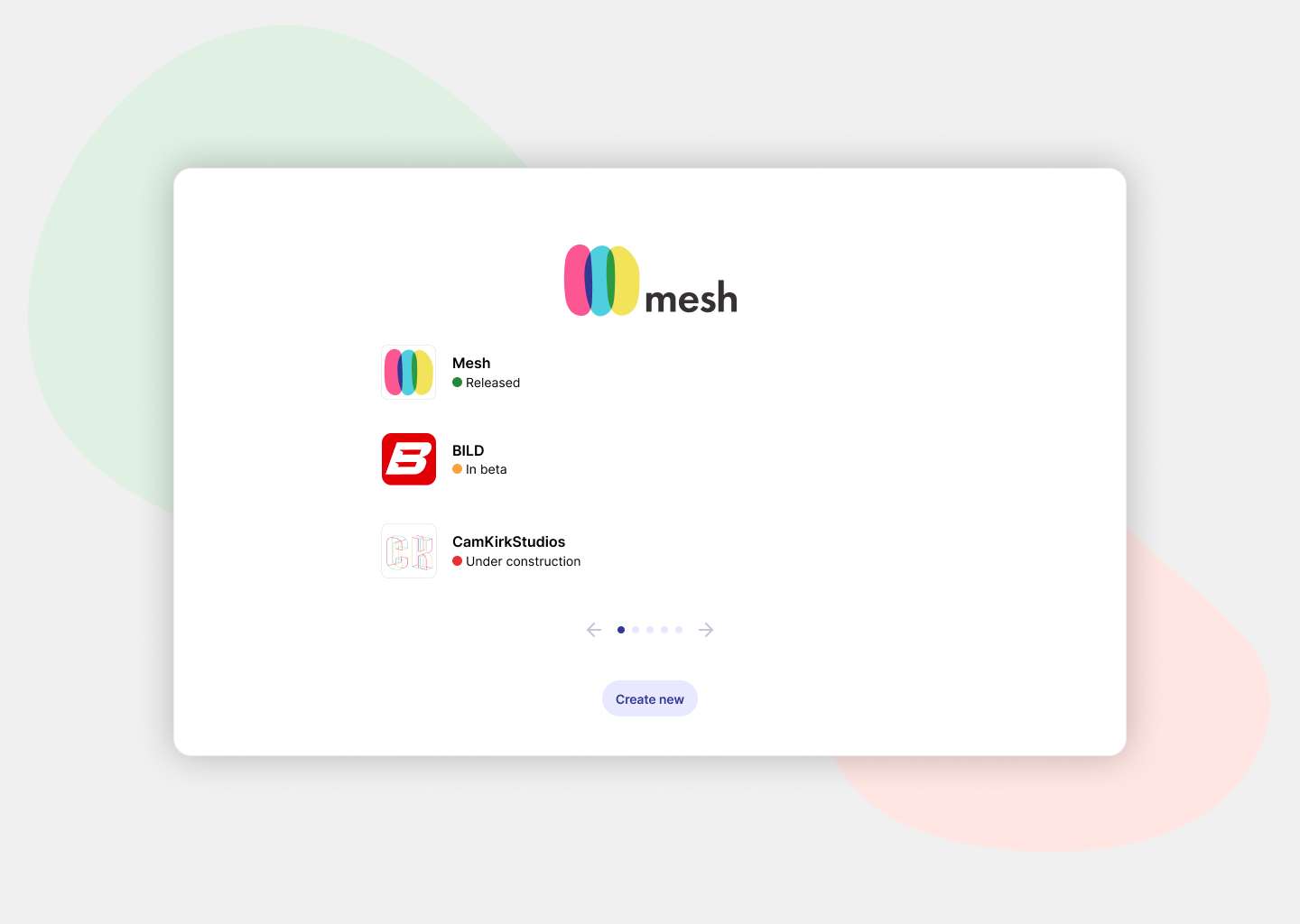
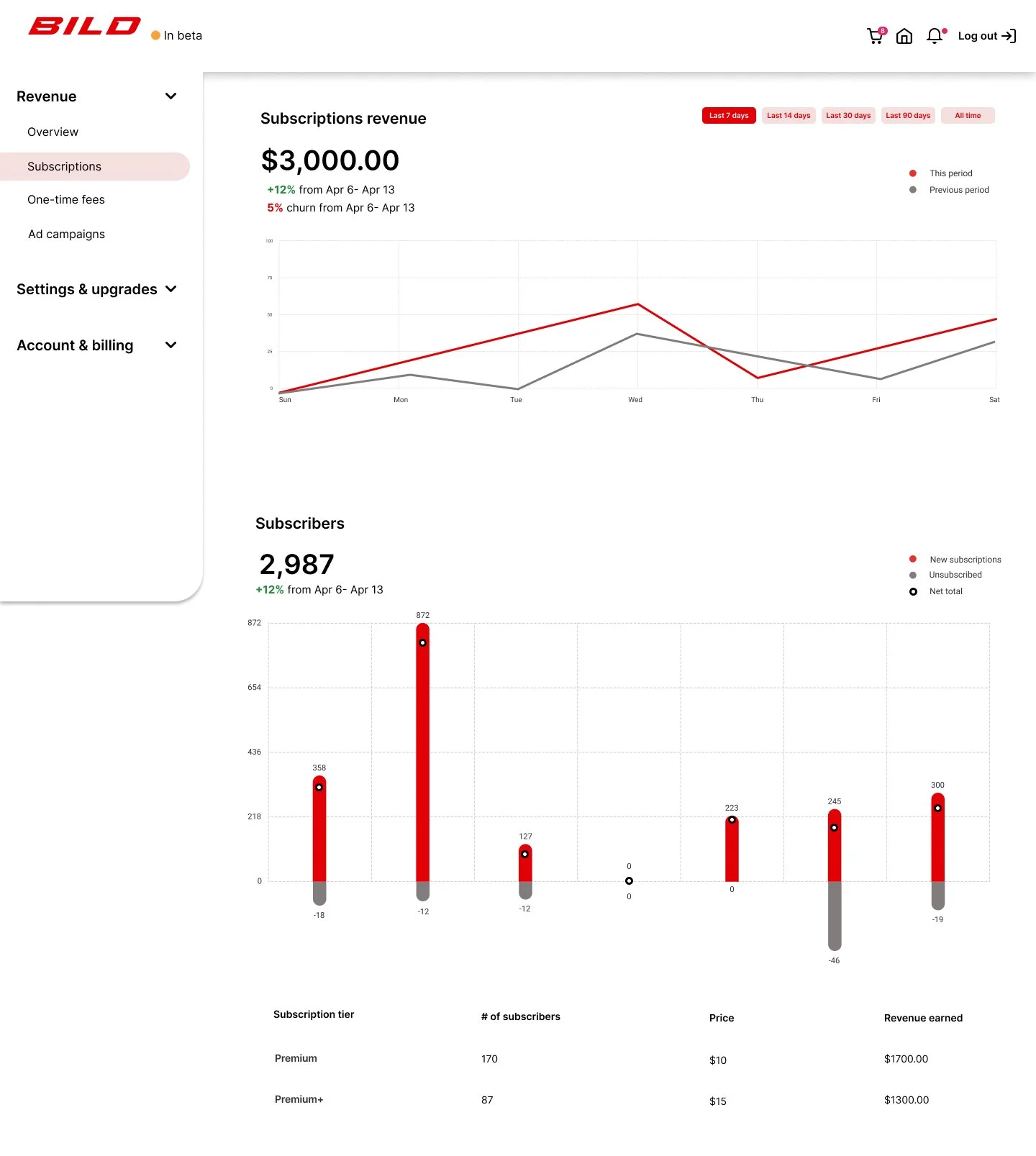
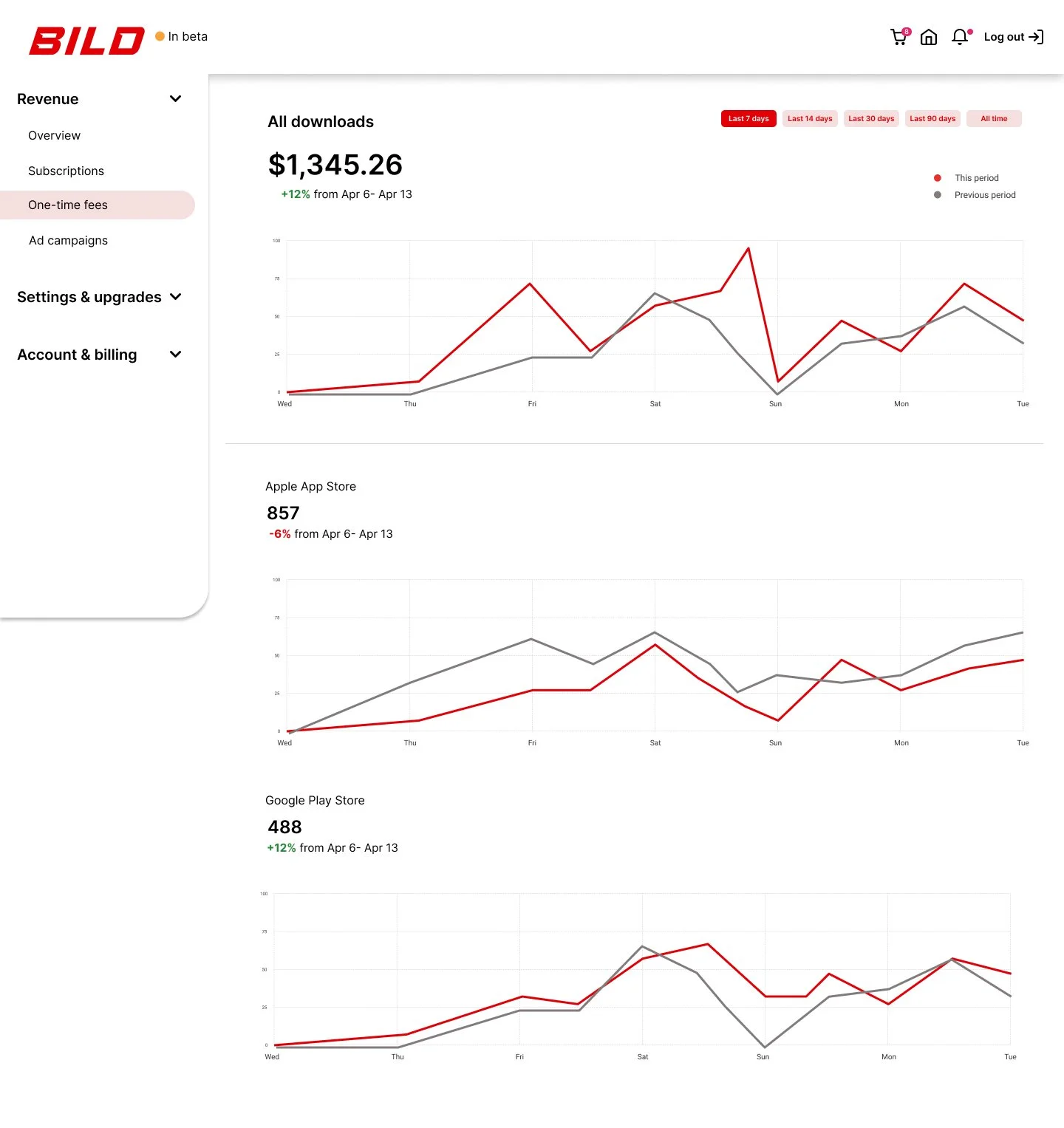
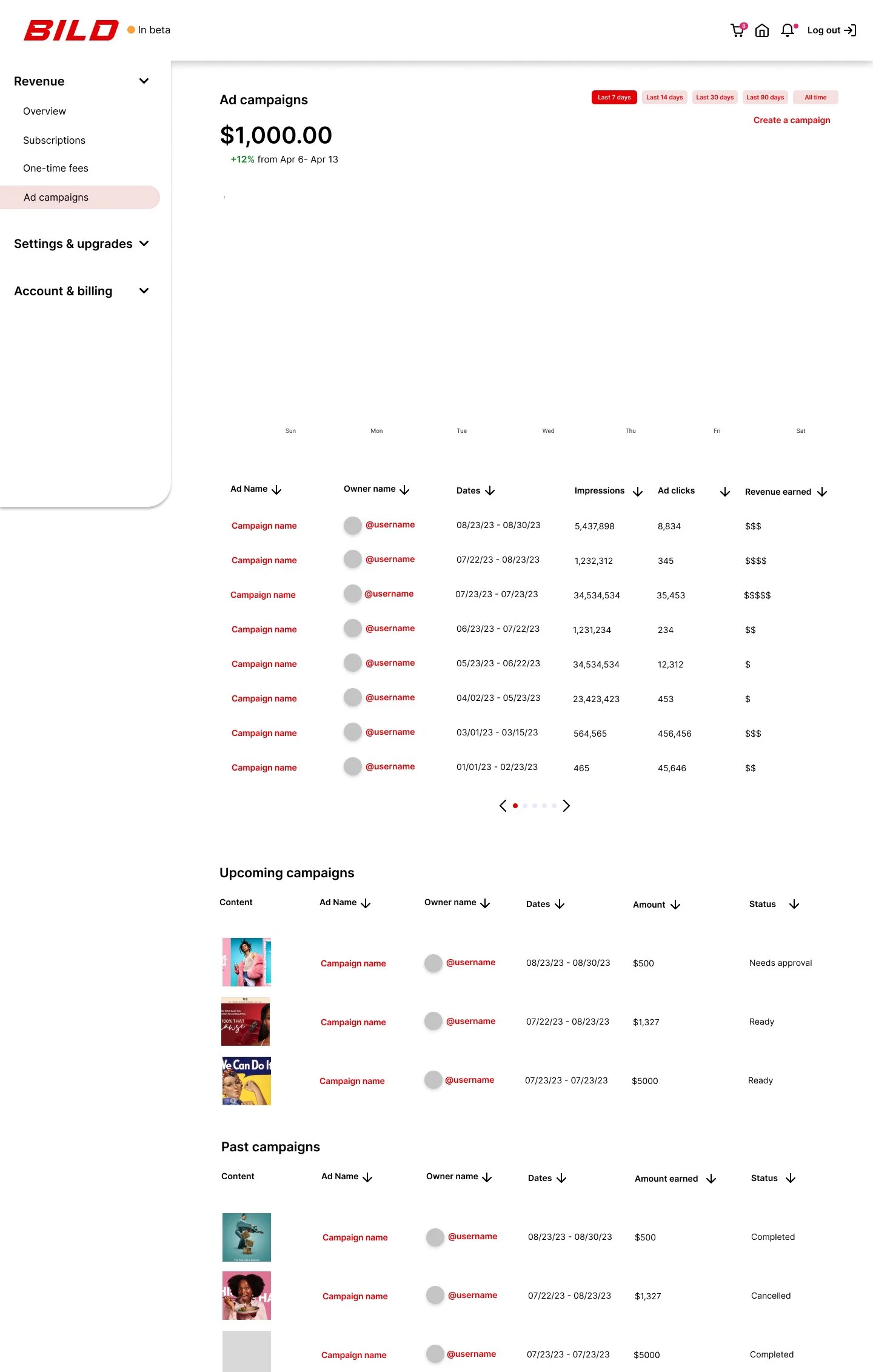
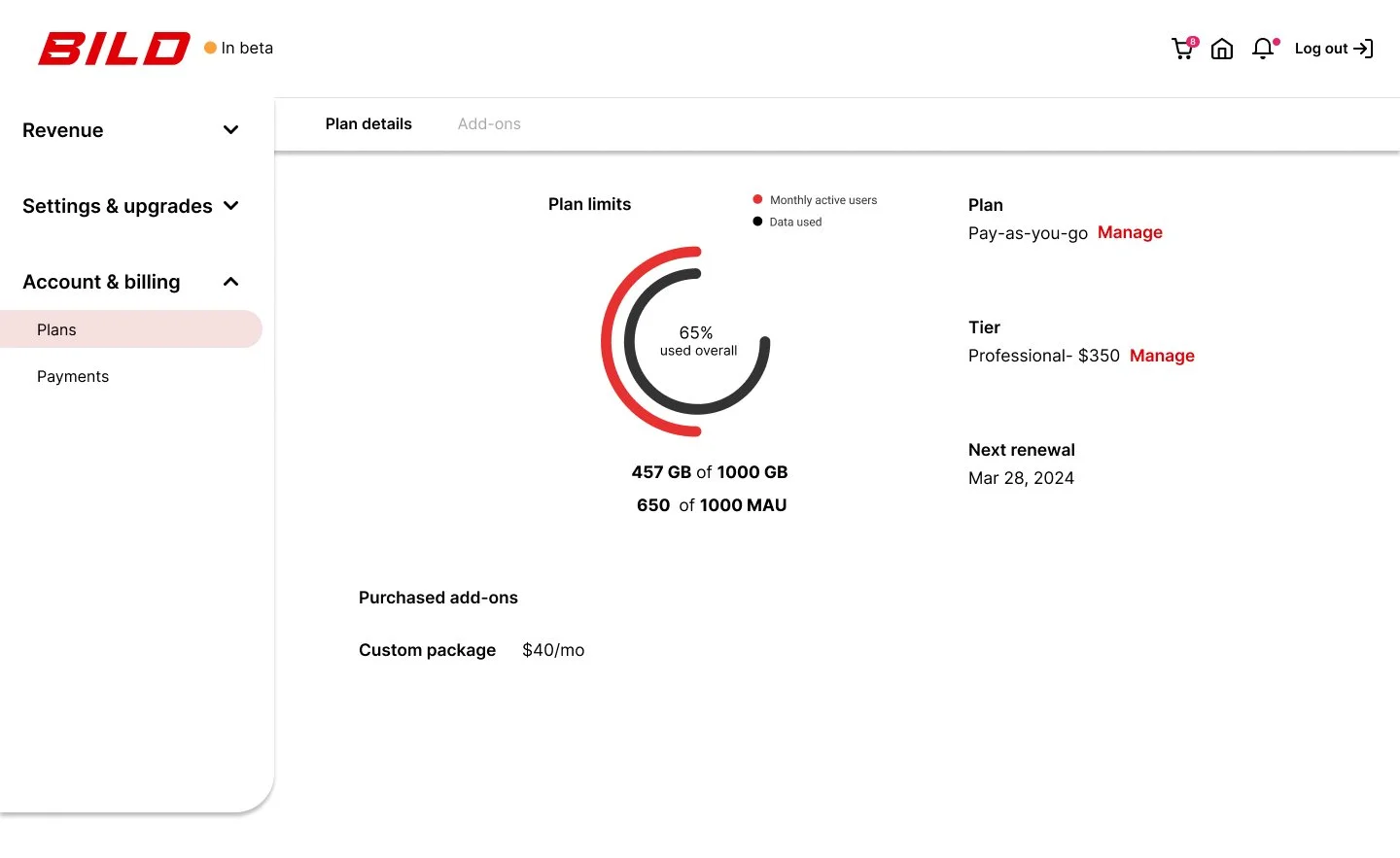
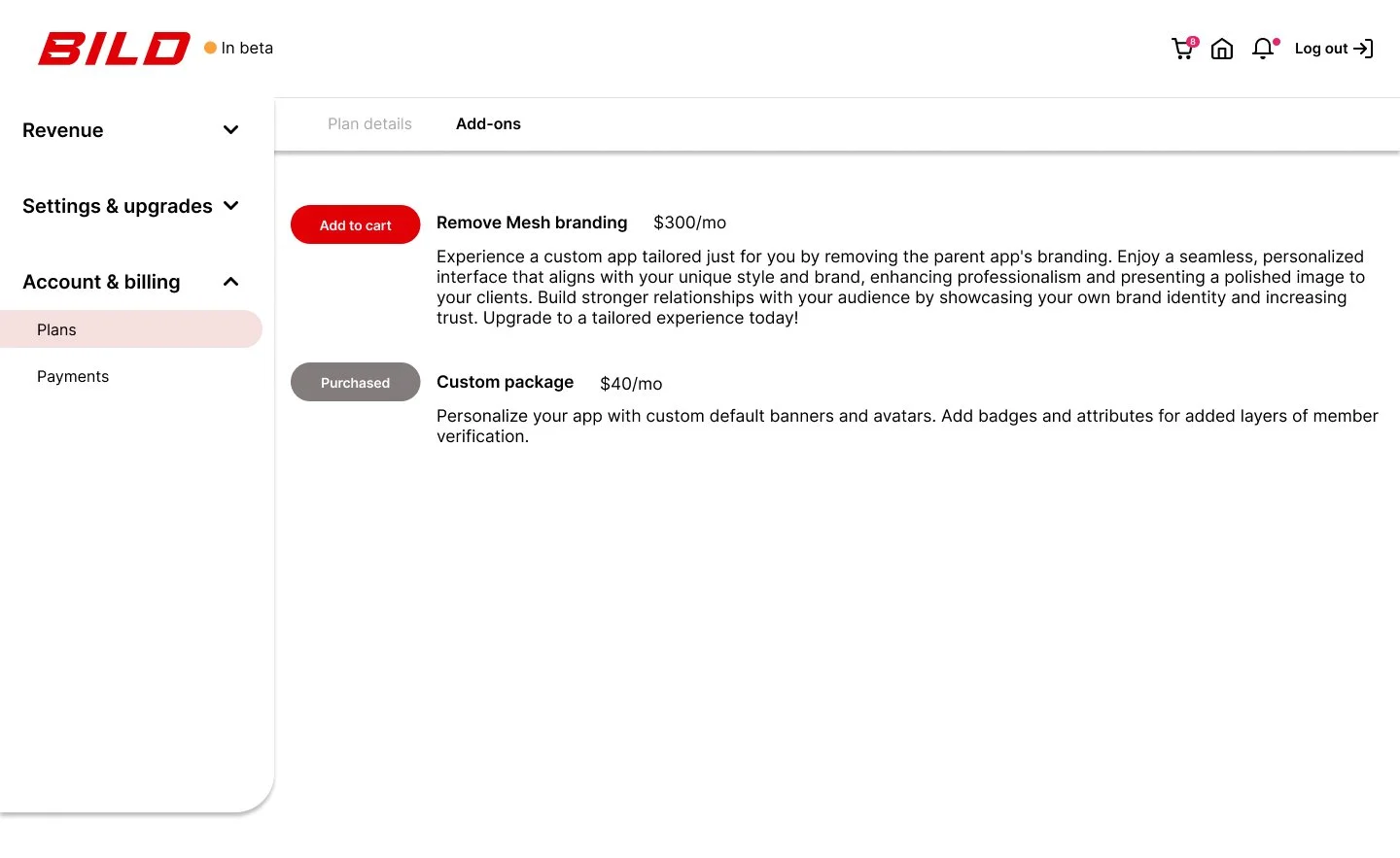
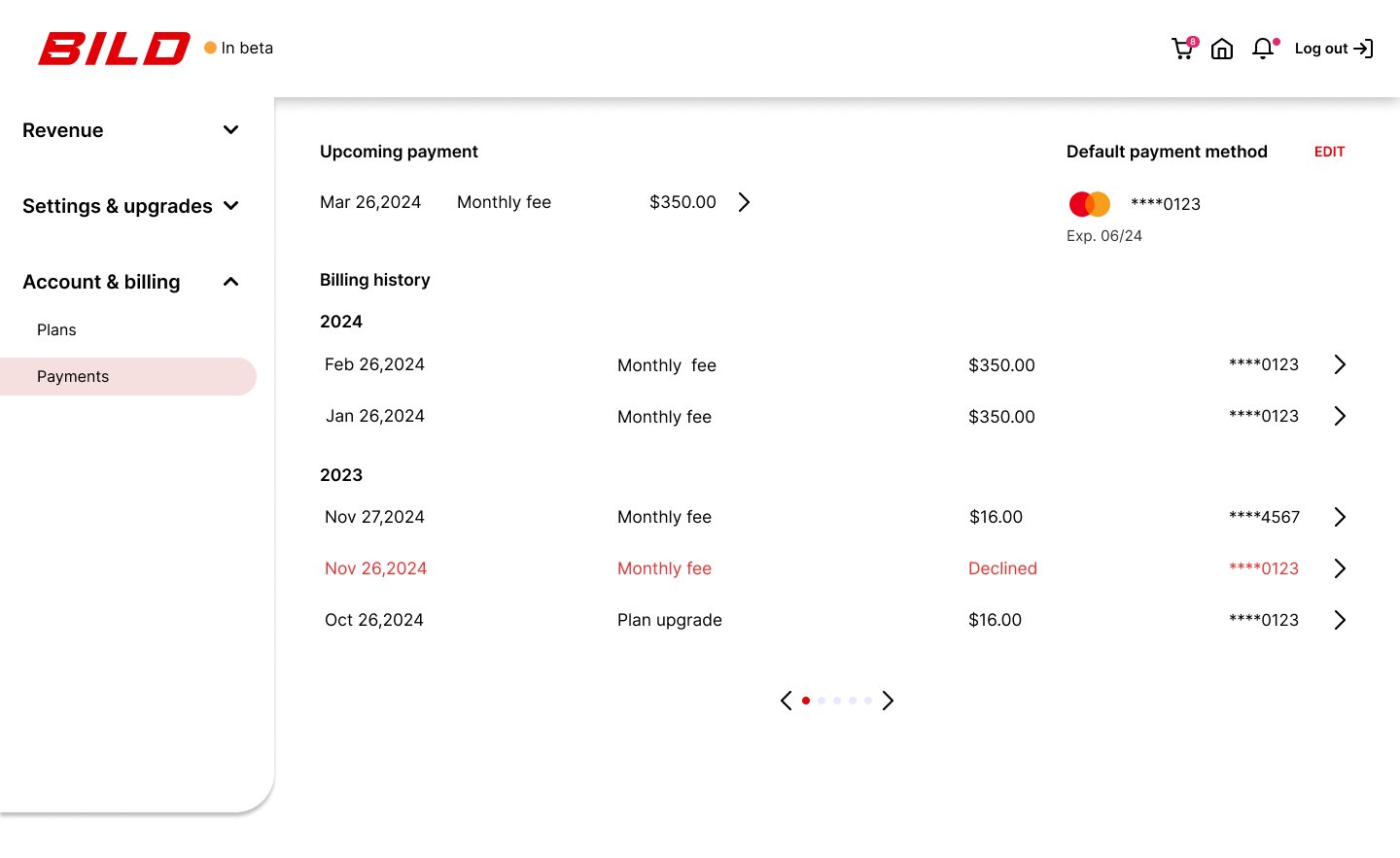
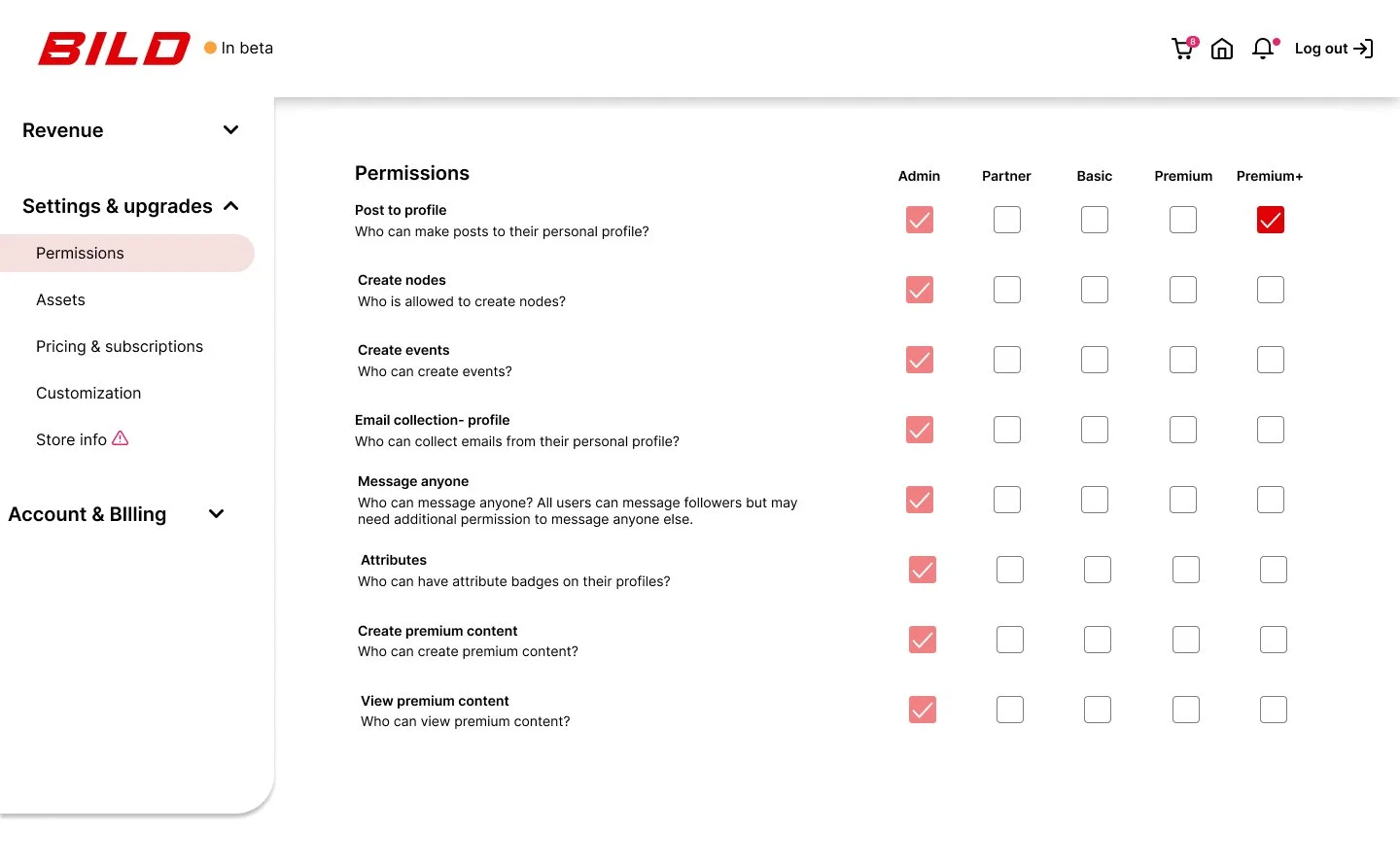
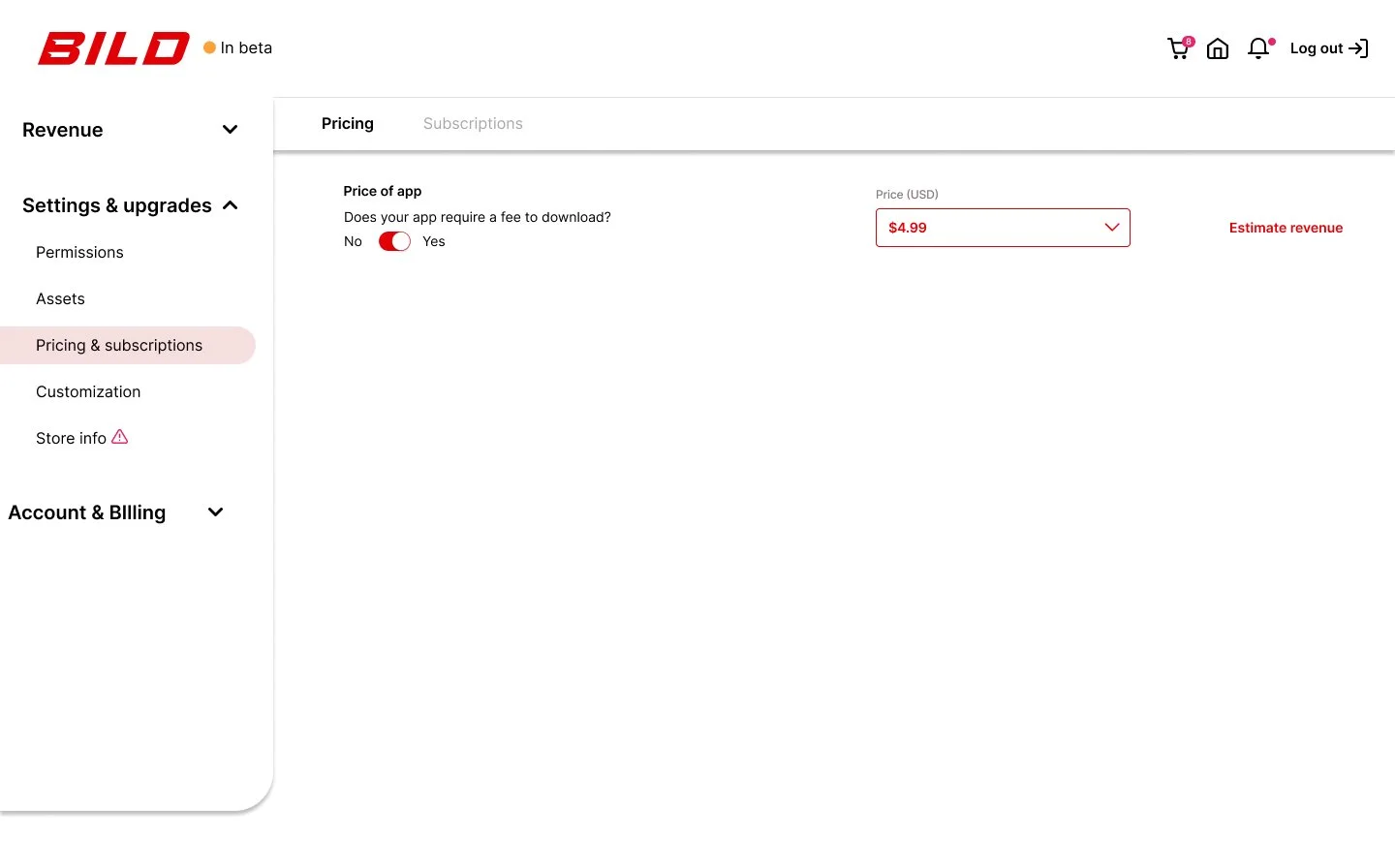
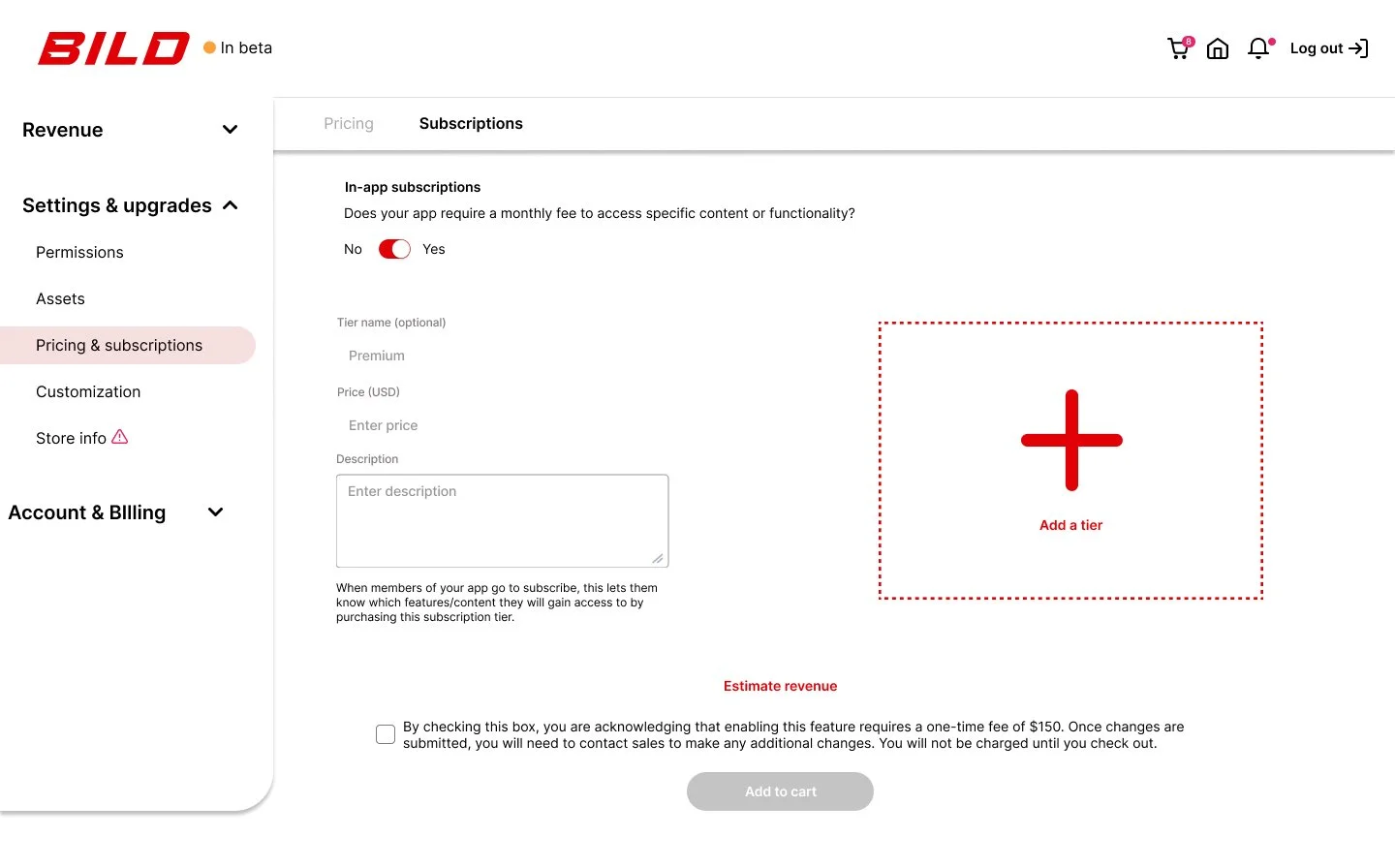
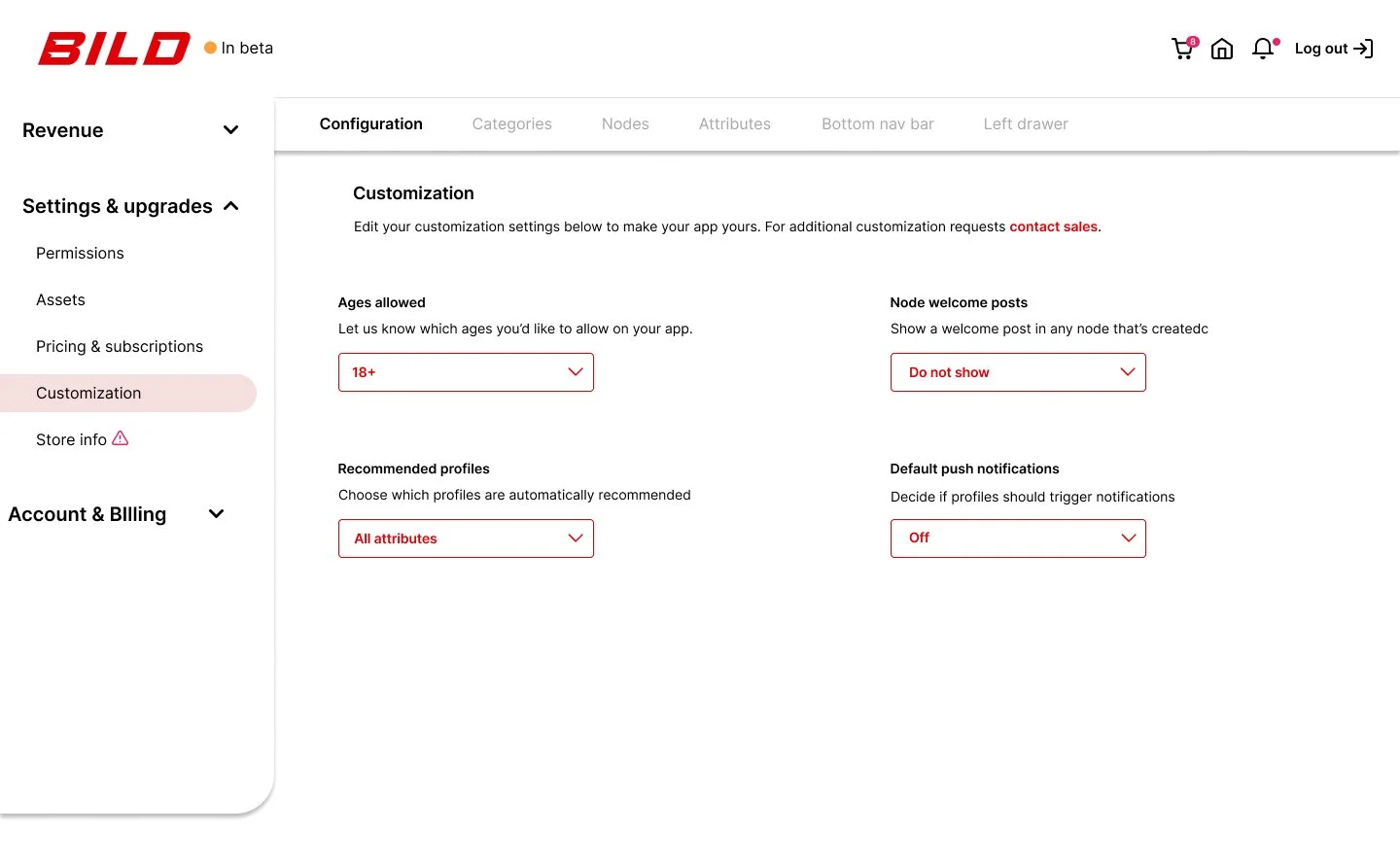
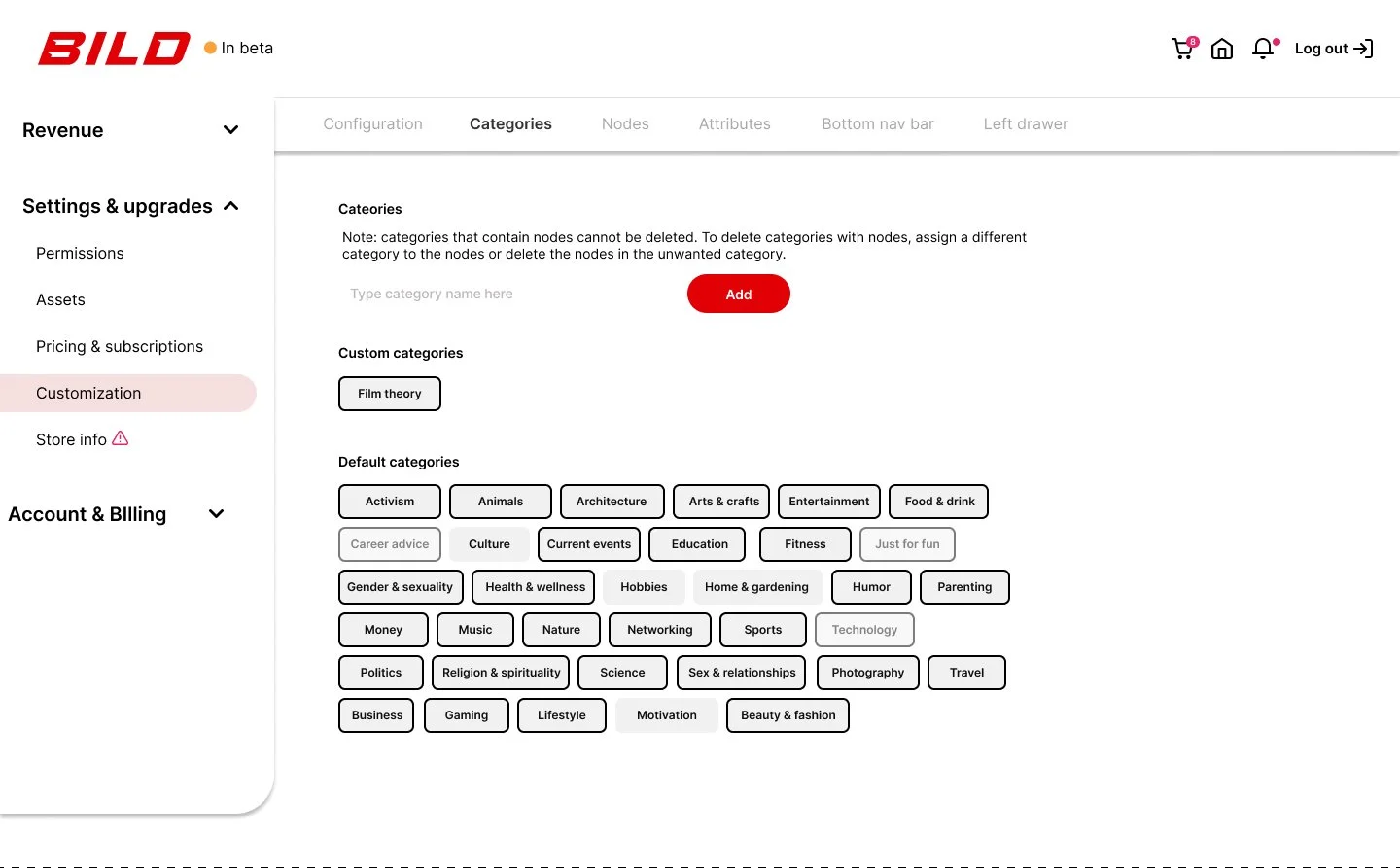
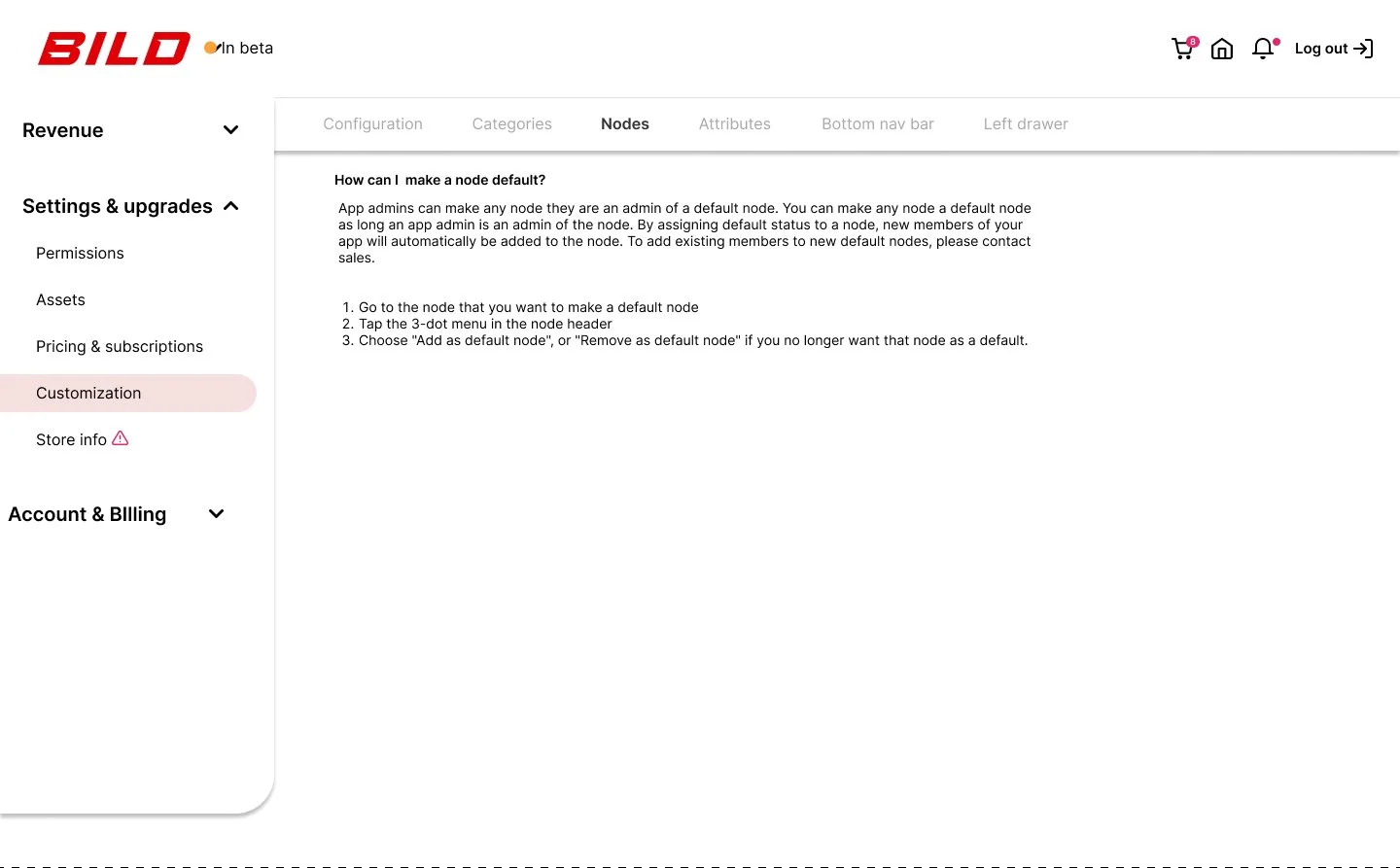
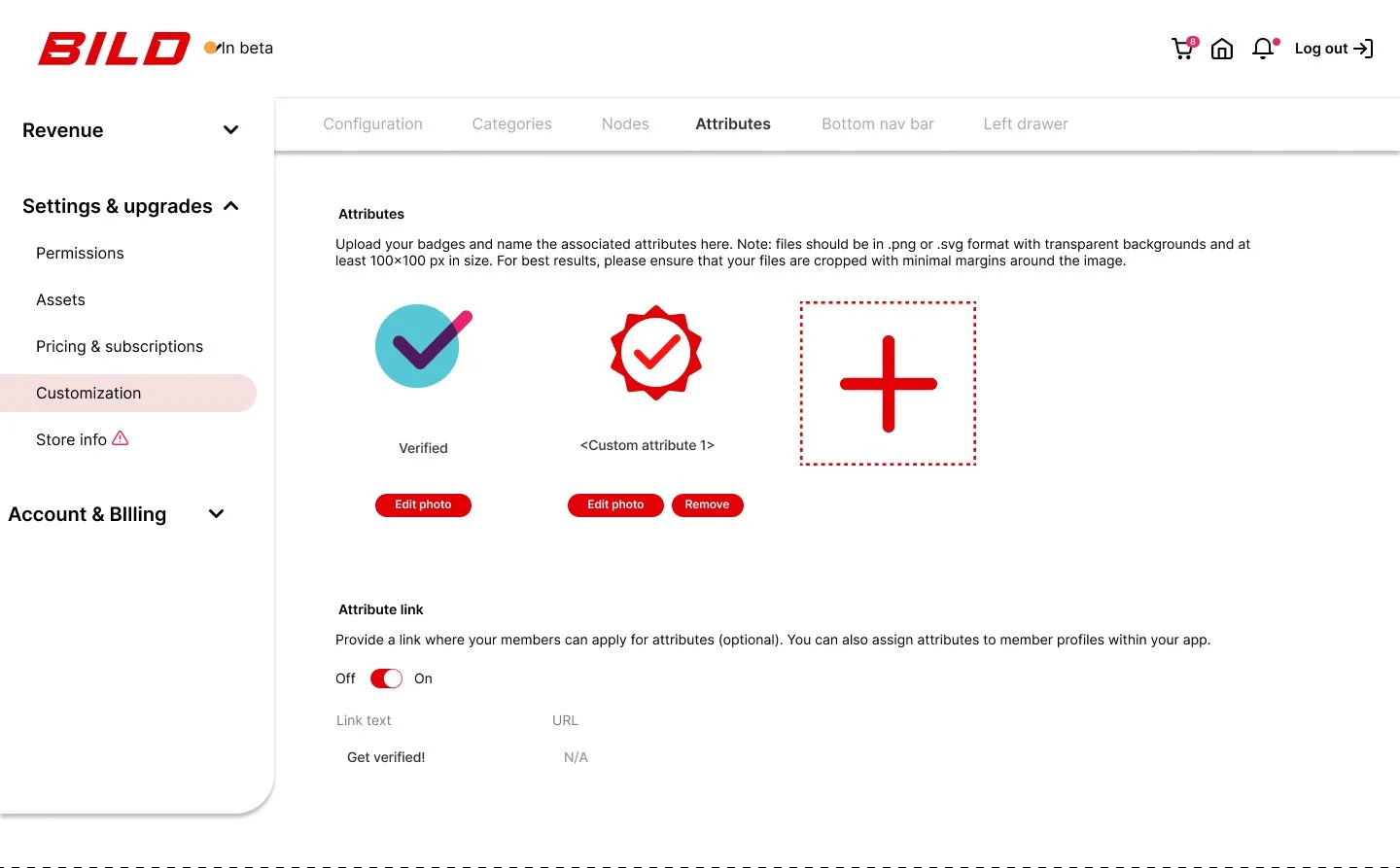
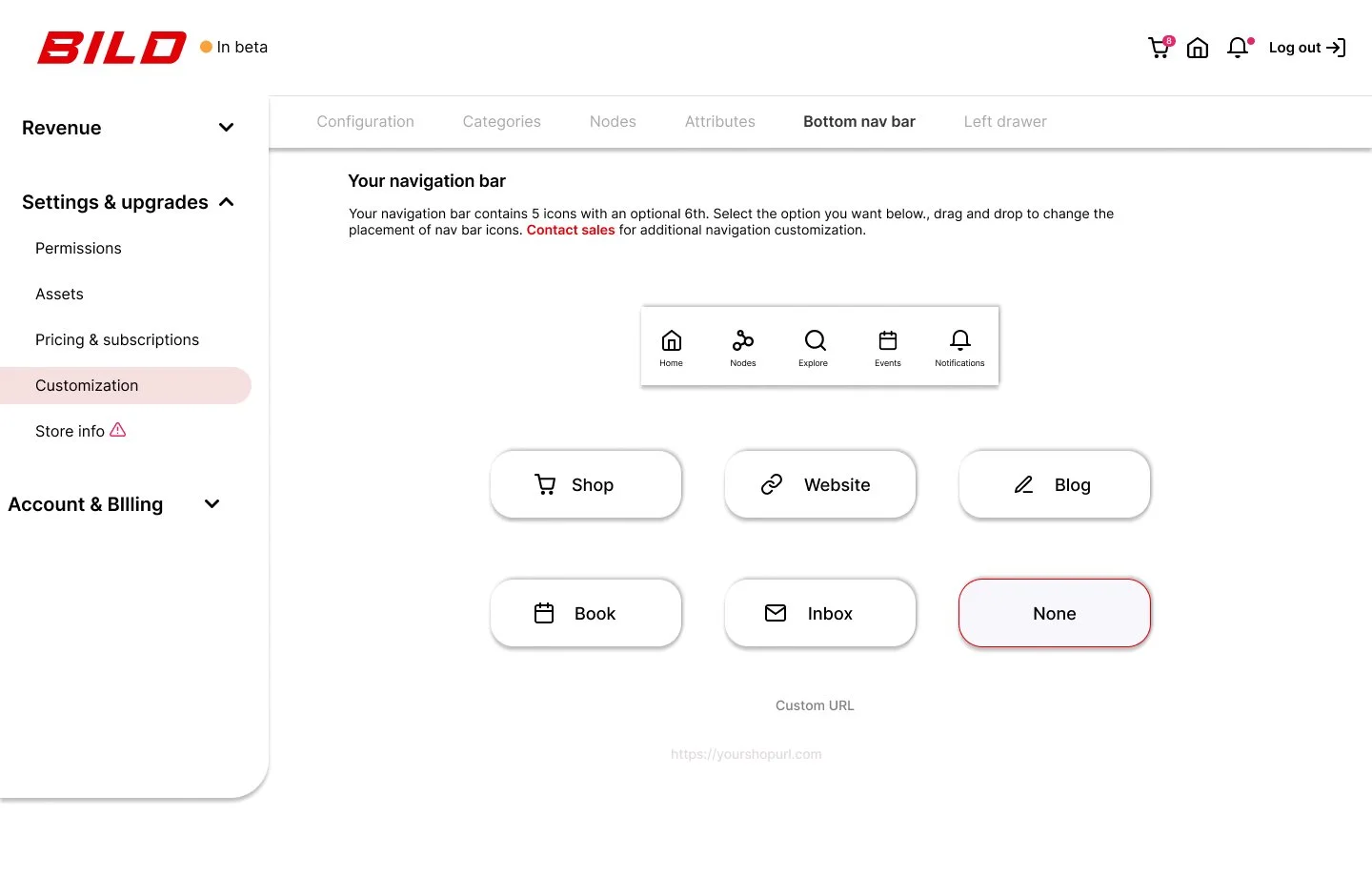
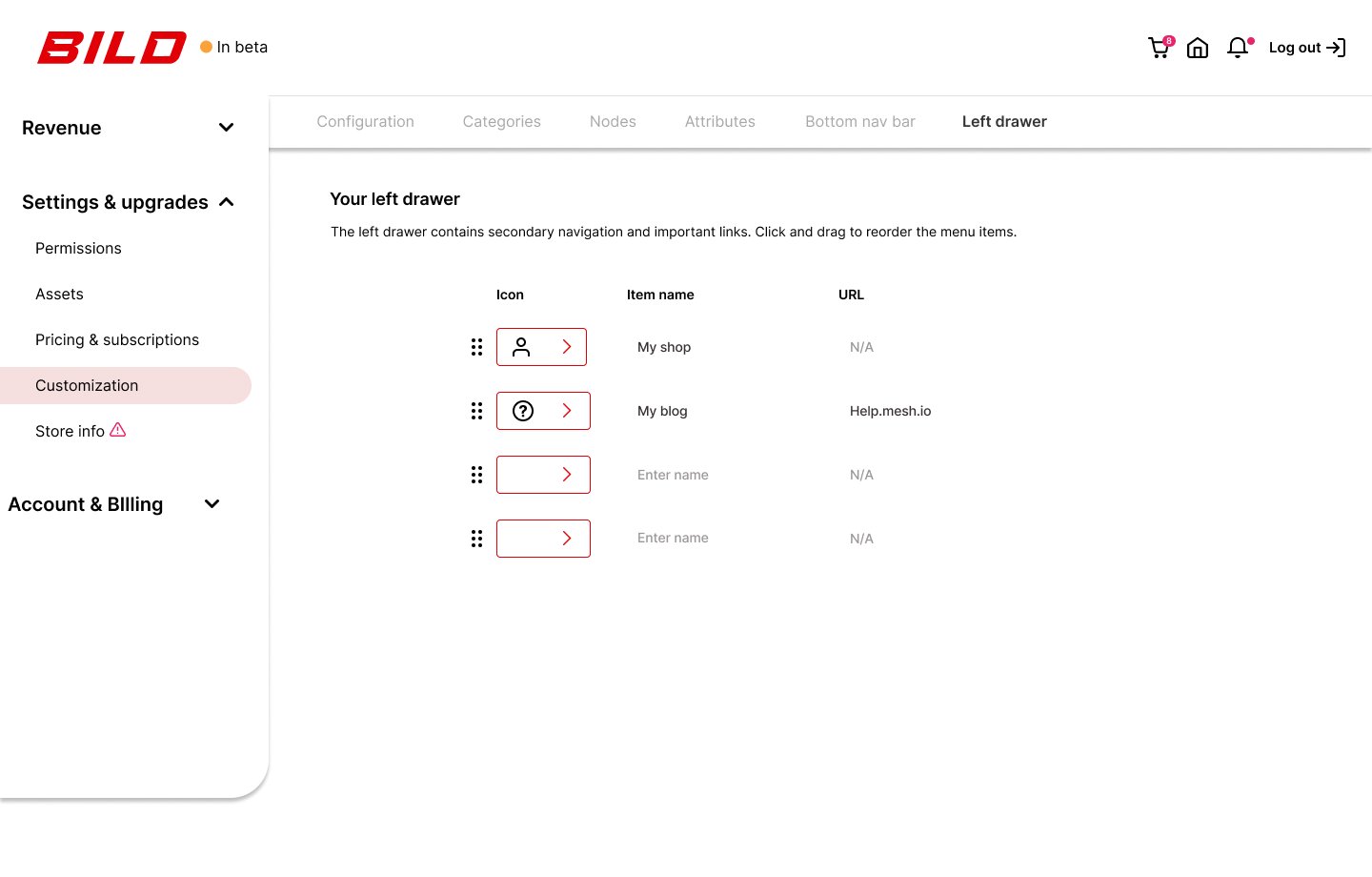
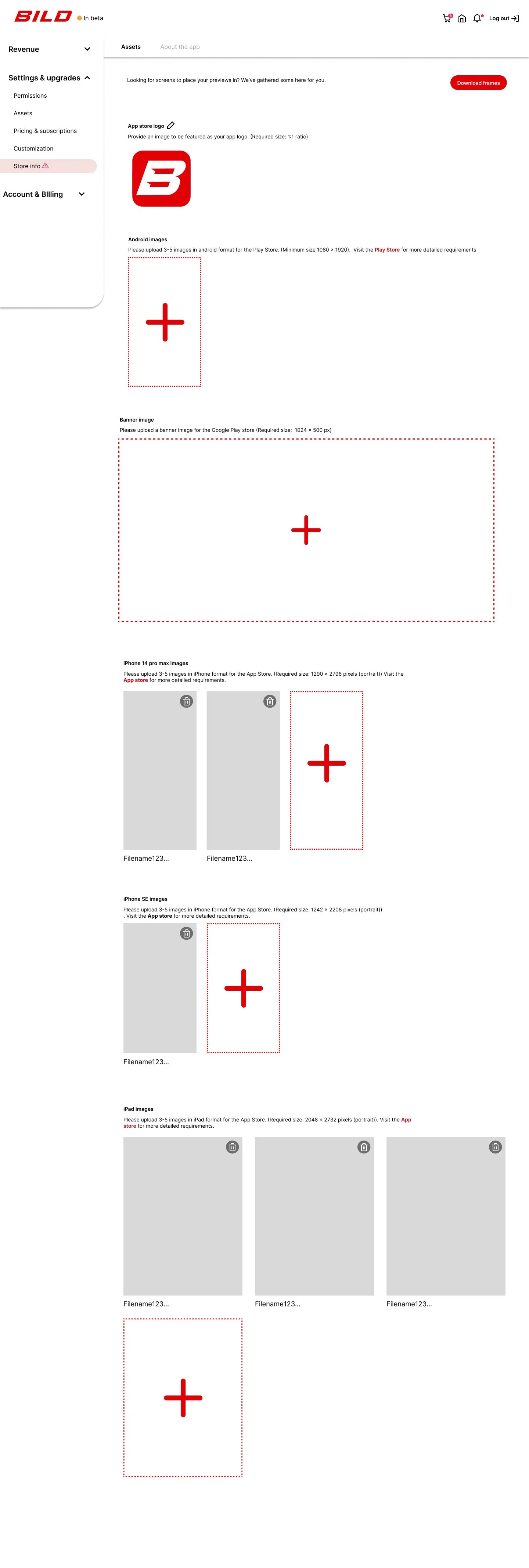
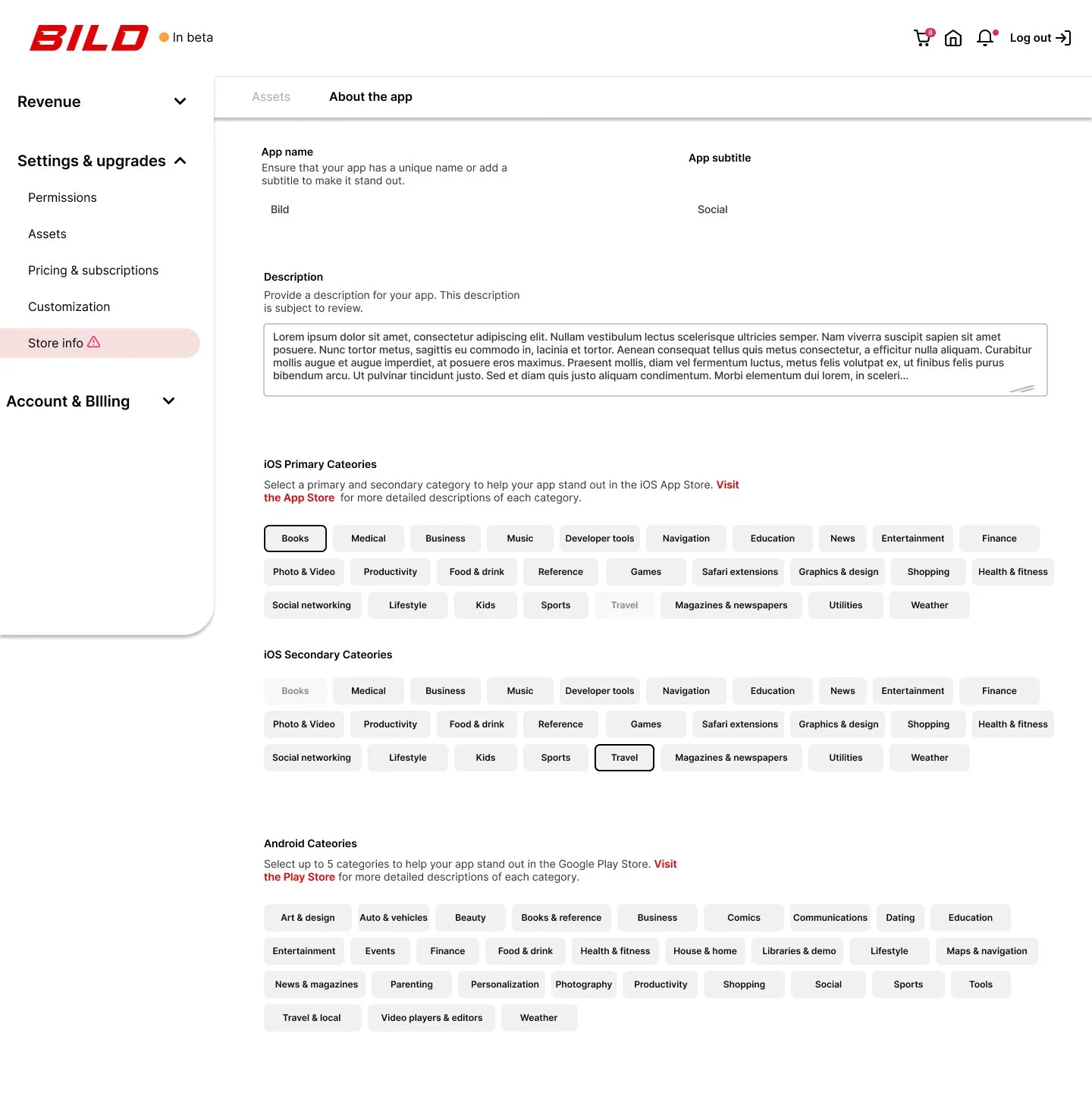
The final design was well-received by both Bild and Mesh stakeholders. The App Manager enabled administrators to:
Independently update visuals, subscription tiers, and settings.
Track revenue and analytics for better performance insights.
Reduce reliance on direct support from Mesh, freeing up internal resources.
Impact & Reflections
While the project’s impact wasn’t measured due to my departure from Mesh, stakeholder feedback was overwhelmingly positive. Bild’s team saw immediate value in the MVP, and the long-term plan was to scale the tool for other Mesh clients.
Lessons Learned:
Had more time and resources been available, a fully automated version would have provided even greater flexibility.
Prioritization of MVP features ensured feasibility, but future iterations could introduce more advanced customization options.
Conclusion
This project was an opportunity to design a high-impact tool that streamlined operations for application administrators. As the Lead Product Designer, I owned the entire design process, from research and ideation to final implementation. The success of the App Manager validated the importance of empowering admins with direct control over their applications and setting a strong foundation for future iterations within the Mesh ecosystem.