


Community Design
Collabs (Collaborative Community Learning Labs)
SCRIPT TO SYSTEM
A two-day STEAM and media literacy workshop where middle school students and adult community members each directed, shot, and performed their own short film.
My role
Producer, Workshop Creative Director, and Facilitator
Company
Collabs (Collaborative Community Learning Labs)
Timeline
March 2026
Outcome

[ Project hero image ]
Overview
Everyone in the room left with a film they made themselves.
Script to System was a multigenerational STEAM and media literacy workshop produced with Collabs, a community education organization that builds ecosystems through arts, STEAM education, and entrepreneurship. The goal was simple to say and hard to pull off: introduce people to the fundamentals of film production by having them make something.
Day 1 brought in middle school students in grades 6 to 8. Day 2 brought in adult community members. Everyone left with a short video they had directed, shot, and performed themselves.
The problem
Collabs came to me with a clear vision and very little to build it on. They had no production team, no media infrastructure, and no set curriculum for hands-on programming like this.
I was going to be holding three roles at once. I would design and co-facilitate the curriculum, produce the shoot on site, and direct the post-production that would turn two days of footage into a media package. On top of that, the work had to land with an 11-year-old storyboarding for the first time and a 79-year-old stepping into the director’s chair.
Small team, thin infrastructure
Collabs had a vision but no production team, media setup, or curriculum, so the whole system had to be built from the ground up.
Three roles at once
I was the curriculum designer, the on-site producer, and the post-production director, and each role had its own demands.
Ages 11 to 79
The workshop had to work for first-time storyboarders and first-time directors, from middle schoolers to a 79-year-old.
A very lean crew
The shoot ran with one cinematographer, one co-facilitator, and no production assistants.
Context
Before building anything, I wanted to understand what Collabs actually needed beyond the event itself. They needed more than a good workshop. They needed assets they could use for donors, social media, their website, and grant applications long after we left.
I also looked closely at how the room would work. With about 30 attendees, two very different age groups, and multiple learning styles, the structure had to carry people who had never touched a camera.
Artifact
Participants worked in small production teams, starting at the storyboarding stations.
Collabs needed a program and also a set of assets that would keep working for them. That shaped every decision I made early on, from how the workshop was structured to how the footage would be captured.
I set coverage priorities before each day so the footage would serve the media package. That meant wide shots for room atmosphere, close-ups on faces during activities, medium coverage of facilitator instruction, and time for interviews at the close of each session.
“
The workshop itself proved the concept it was teaching.
Process
I treated the project as one system with three connected parts: the curriculum, the shoot, and the media package. Each part was designed with the other two in mind, so nothing had to be reinvented on the day.
01
Building the curriculum. I developed the curriculum from scratch with Renée Harrison. She led the acting and direction components, and I built the production process lectures, storyboarding stations, and activity structure.
02
Designing the run of show. I planned the day for about 30 attendees in teams of five to six, with timing, group logistics, and differentiated instruction for different learning profiles already built in.
03
Running the room. On both days I was the lead facilitator and the on-site producer. I directed camera coverage, managed pacing, and solved problems as they came up, with one cinematographer and one co-facilitator beside me and no production assistants.
04
Scoping the media package. After the event, I designed a package that would let Collabs cover donor outreach, social media, web, and grant applications without needing another shoot or edit.
Solution
The solution was a workshop where every creative role was tied to a STEAM discipline, so participants could see filmmaking as science, technology, engineering, art, and math working together. People worked in small production teams of five to six and moved through stations for storyboarding, rehearsal, and filming.
Behind that sat a media package built for Collabs to use on their own. It includes a hero film, a secondary cut, social cuts, edited photo selects, and organized raw footage.
Final design
Middle school students worked in teams of four to six, moving from storyboard to rehearsal to filming and taking on every role in the process.
Walkthrough
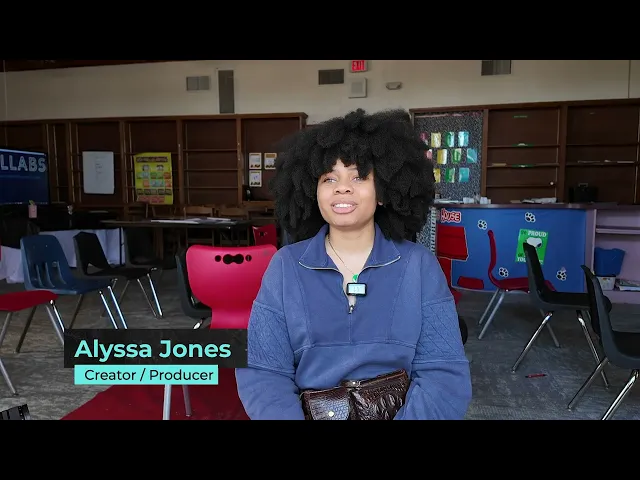
This is the hero film we premiered at day 2 of the event. It runs about two and a half minutes and follows four voices, from the founder and COO to the school’s interim principal and both facilitators, moving from mission to intention to impact.
Walkthrough
Outcome
About 30 middle school students and a four-decade adult cohort took part, and the hero film premiered live on Day 2. Collabs ended the engagement with a ready-to-use set of assets for every channel they care about.
The shift
From a vision to a working system.
Collabs started with a strong idea and no way to carry it out. They ended with a tested curriculum, a proven model, and a media package they can use on their own.
Reflection
What I learned
Looking back
Script to System was a systems problem at its core. The curriculum, the shoot, the edit, and the negotiation were each manageable on their own. The challenge was integrating all of them in real time, with a lean team and a lot of stakeholders.
What came out of that is a model for community media production that doesn’t need a big budget or a big team to produce professional work. The workshop proved the idea it was teaching: a group of people with clear structure, defined roles, and a shared goal can make something real in a short window, at any age. That is the version of this work I want to keep building.
Alyssa Jones © 2026